Insights and features on music, audio technology, and sonic innovation.
103 entries
Articles
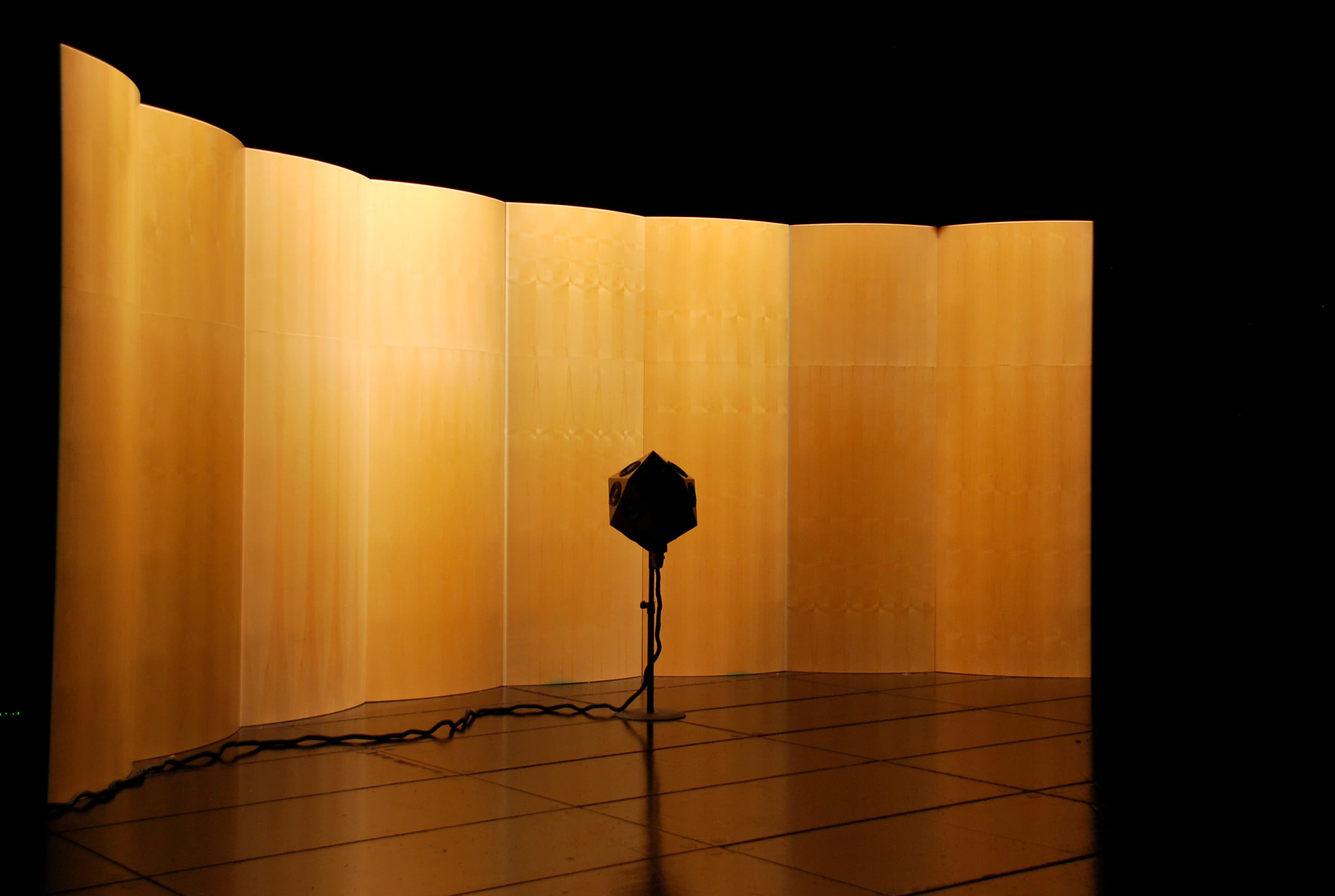
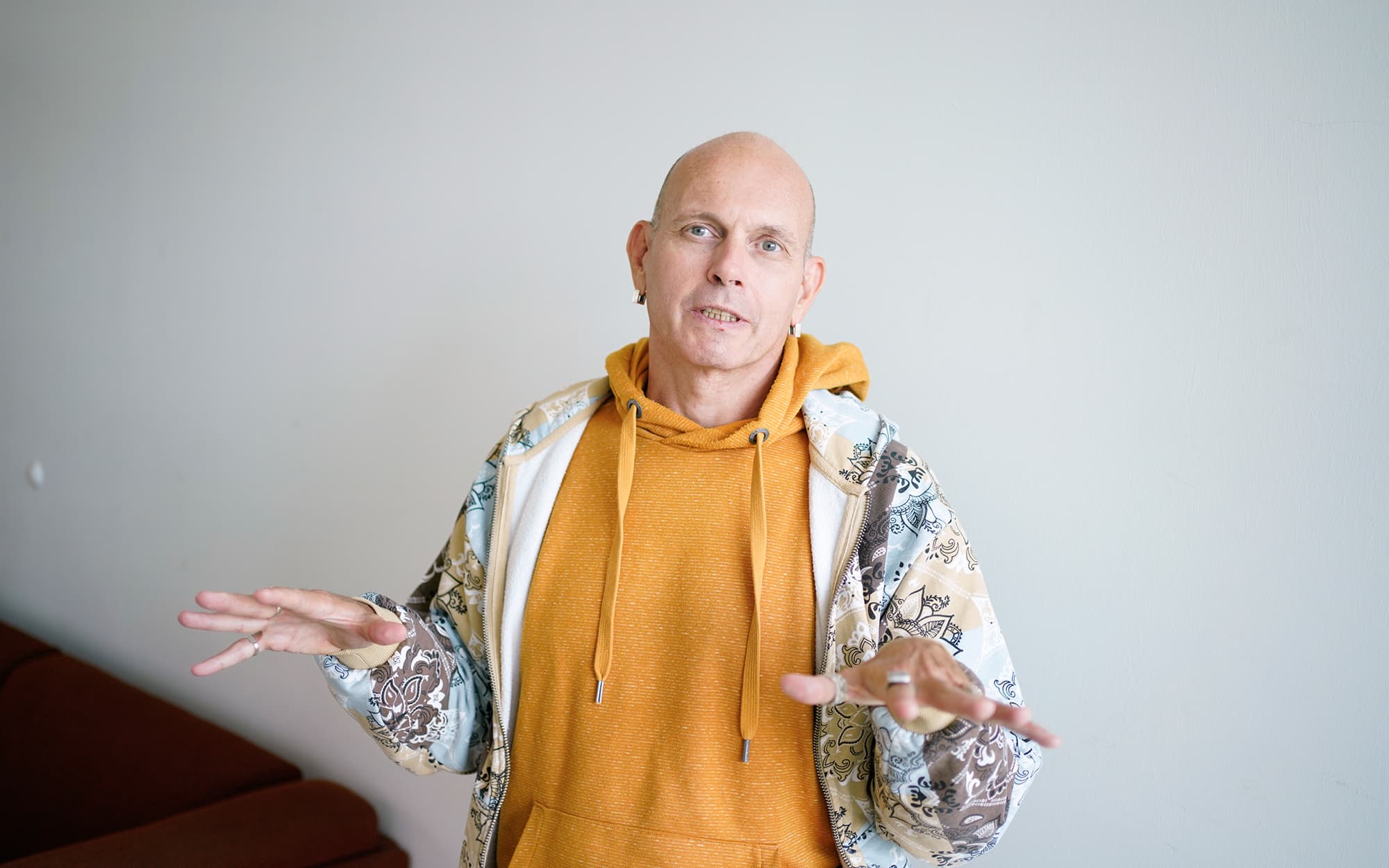
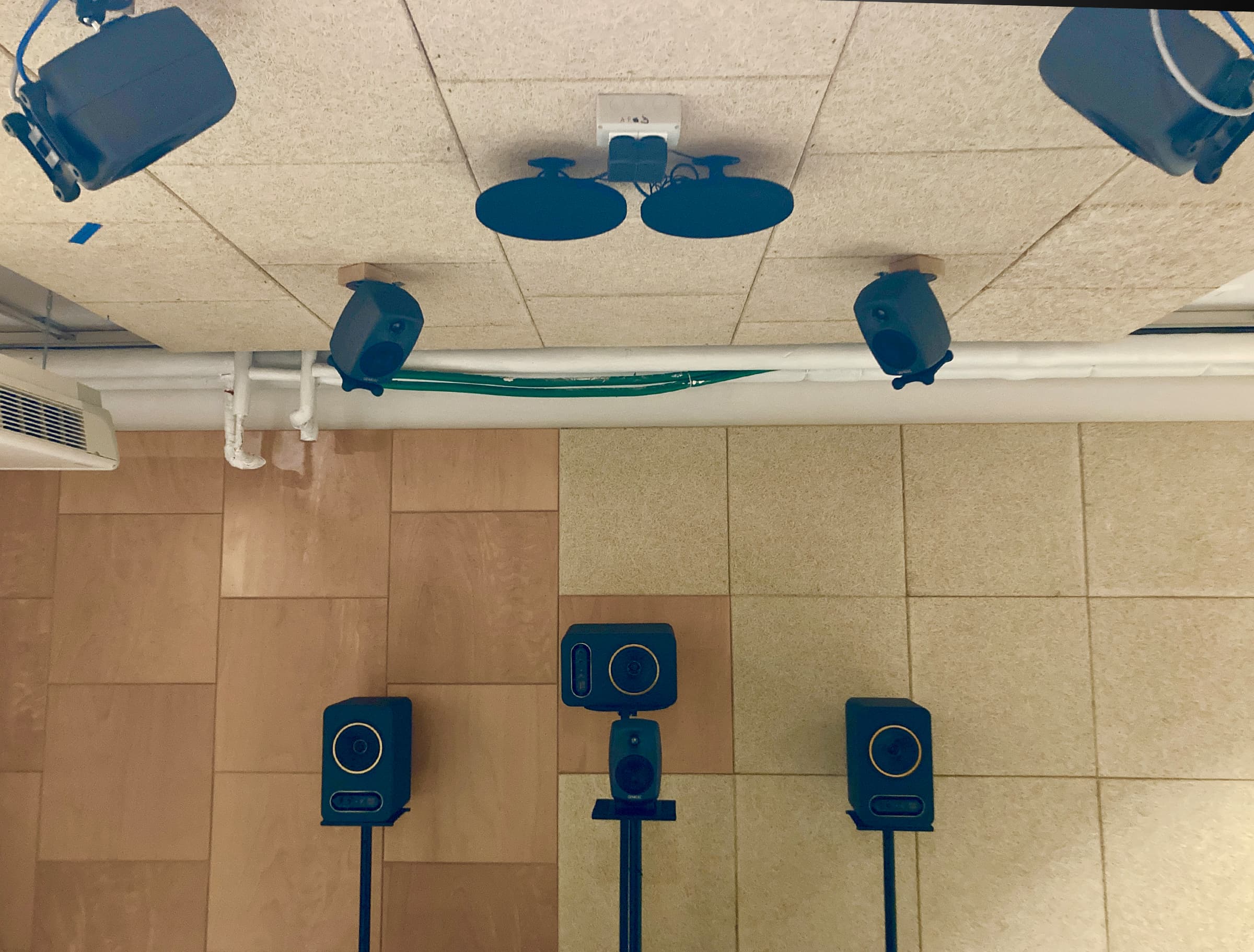
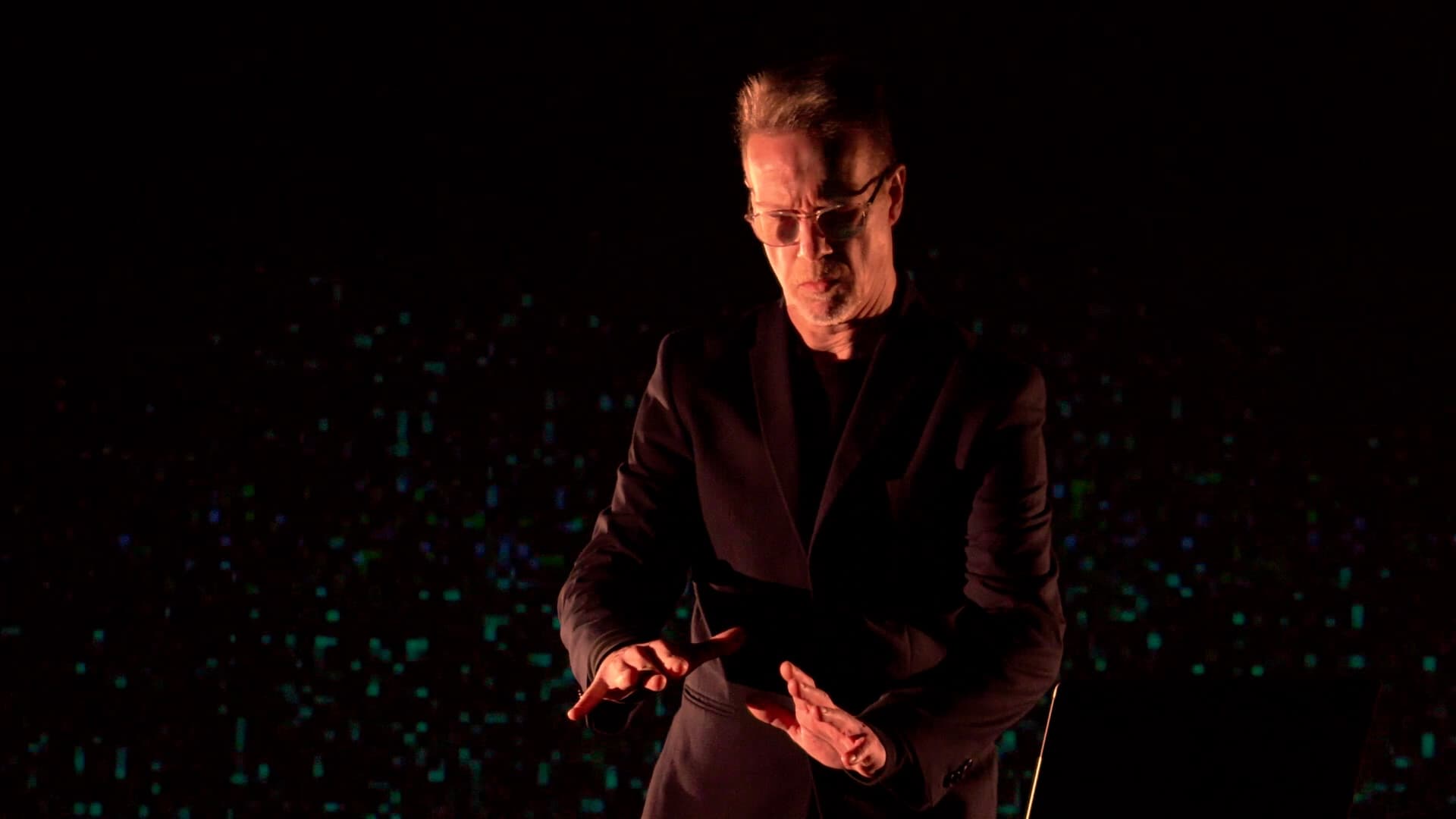
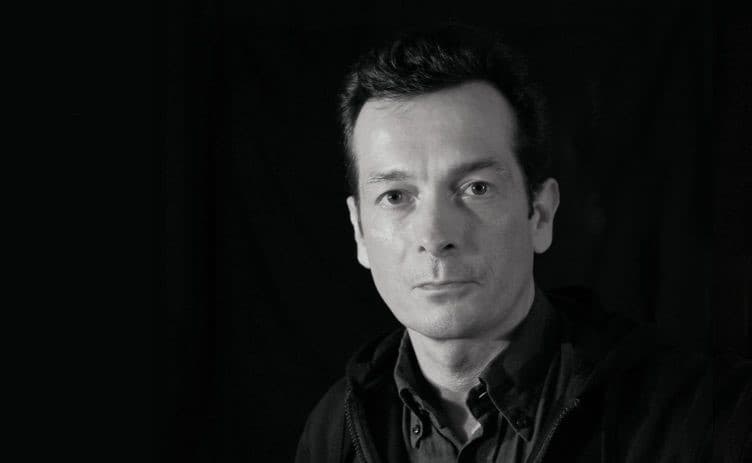
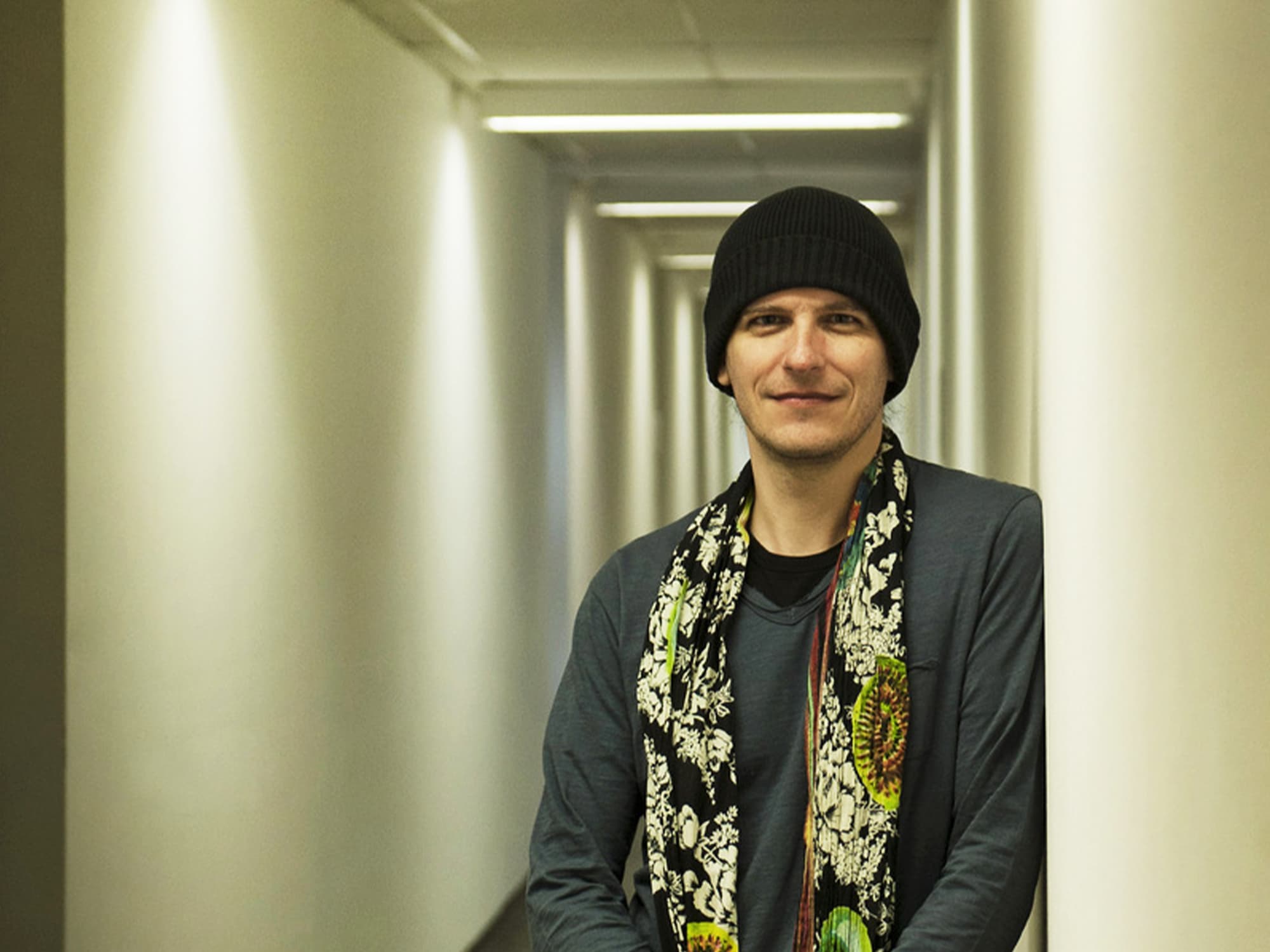
Gerriet K. Sharma works where sound stops coming from speakers — and starts shaping space itself. In this interview, the composer and co-founder of spæs Lab Berlin talks about the IKO loudspeaker system as a genuine instrument, the persistent gap between technical progress and artistic practice, and why 3D Audio means far more than a marketing promise. A conversation about the sculpturality of sound, the future of spatial aesthetics — and the questions nobody in the spatial audio scene is asking out loud yet.
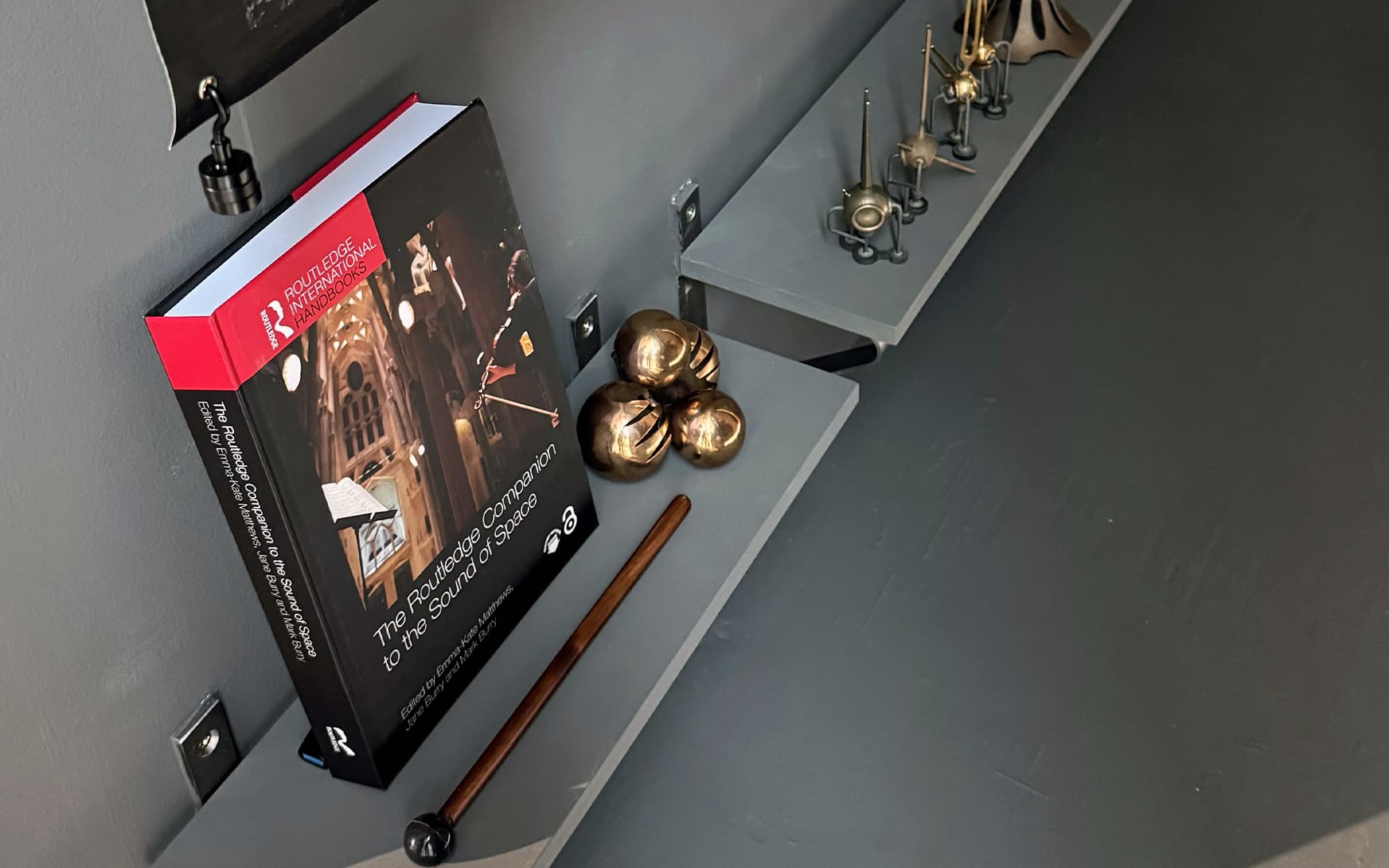
The Routledge Companion to the Sound of Space is a comprehensive collection of essays and accompanying sonic material written by practitioners and researchers across a wide range of disciplinary fields, addressing both the current state and future trajectories of works where sonic and spatial practices intersect. The volume was edited by myself, an architect, composer and academic, alongside Prof. Jane Burry (University of Adelaide) and Prof. Mark Burry (University of Melbourne), both architects whose work similarly operates across disciplinary boundaries.
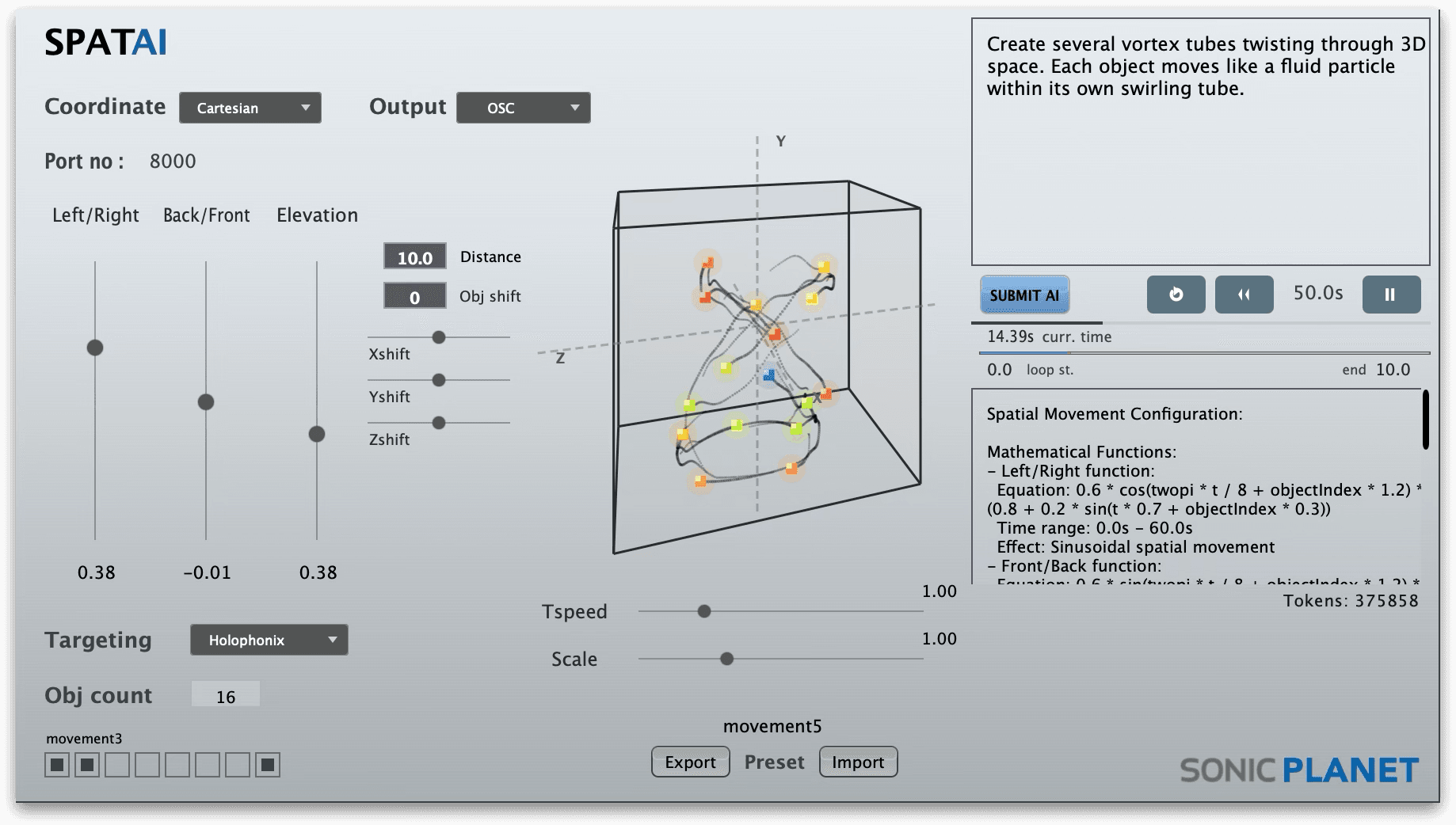
What if you could speak to your panner? SpatAI turns "make a chaotic spiral" into real-time control data, effectively replacing manual labor with algorithmic performance. We analyze how this tool uses AI to bridge the gap between language and spatial object management.
For anyone with basic audio production knowledge, this free course opens the door to spatial audio. Learn principles, psychoacoustics, and creative applications through interactive lessons and real-world case studies, exploring Ambisonics, Dolby Atmos, and beyond.
A data-driven diagnosis of the LATAM immersive scene. This article maps technical frictions, the reality of borrowed hearing, and the survival workflows professionals use to navigate a system not designed for their context.
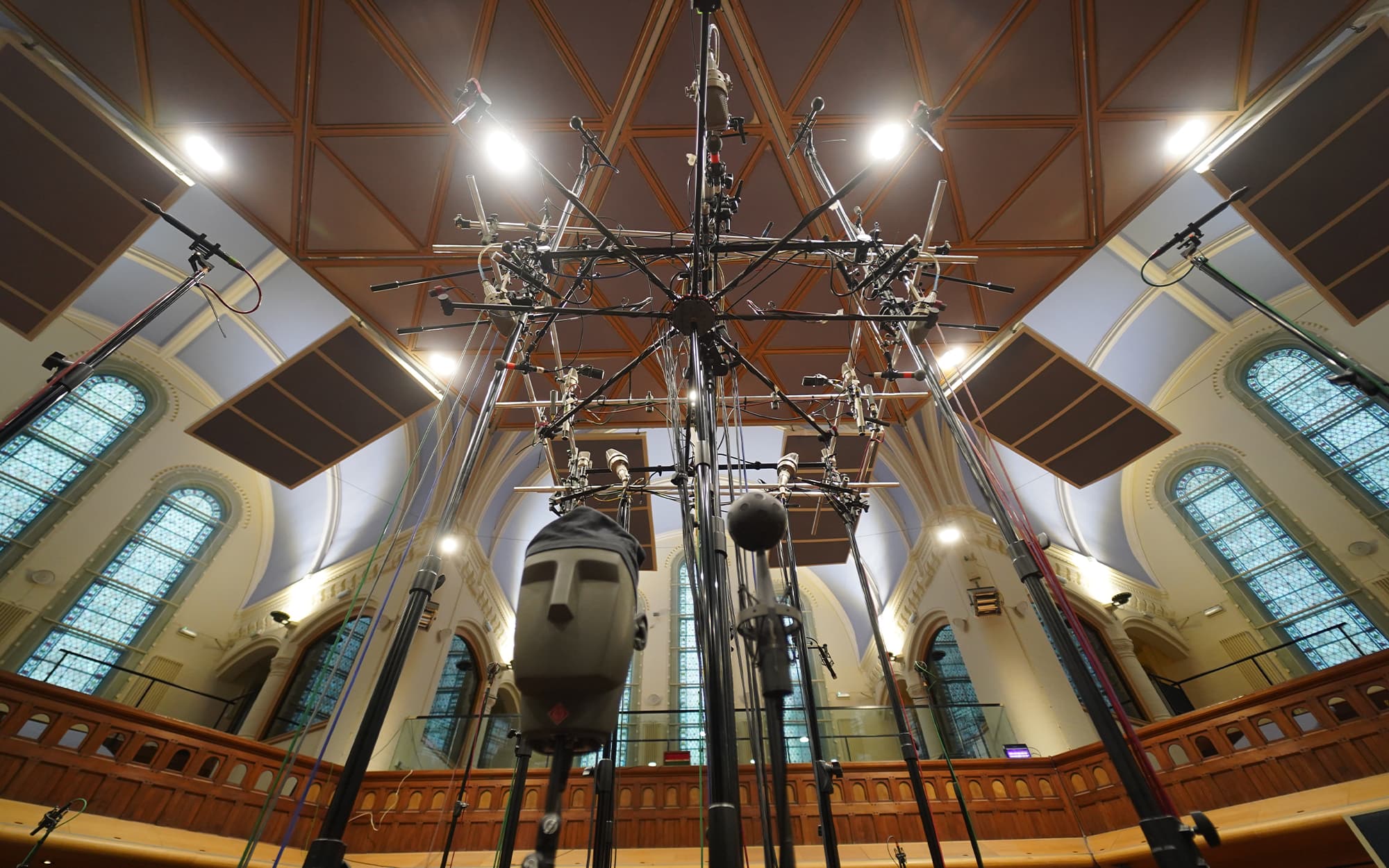
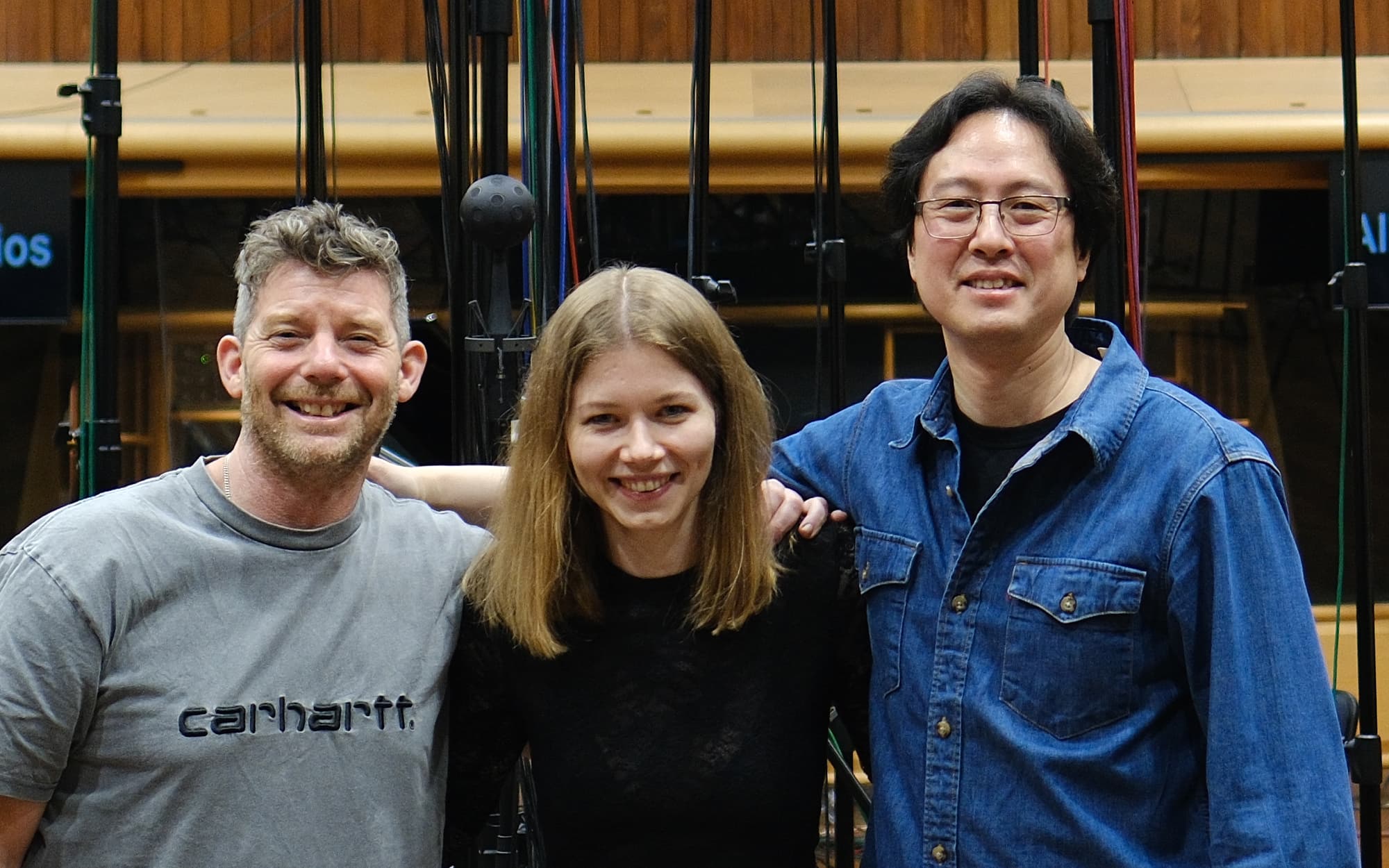
Step inside the orchestra. The ECHO Project offers a rare open-access look at immersive recording at AIR Studios. Featuring the London Contemporary Orchestra, Volker Bertelmann and top audio engineers, explore the story behind this massive resource for sound professionals.
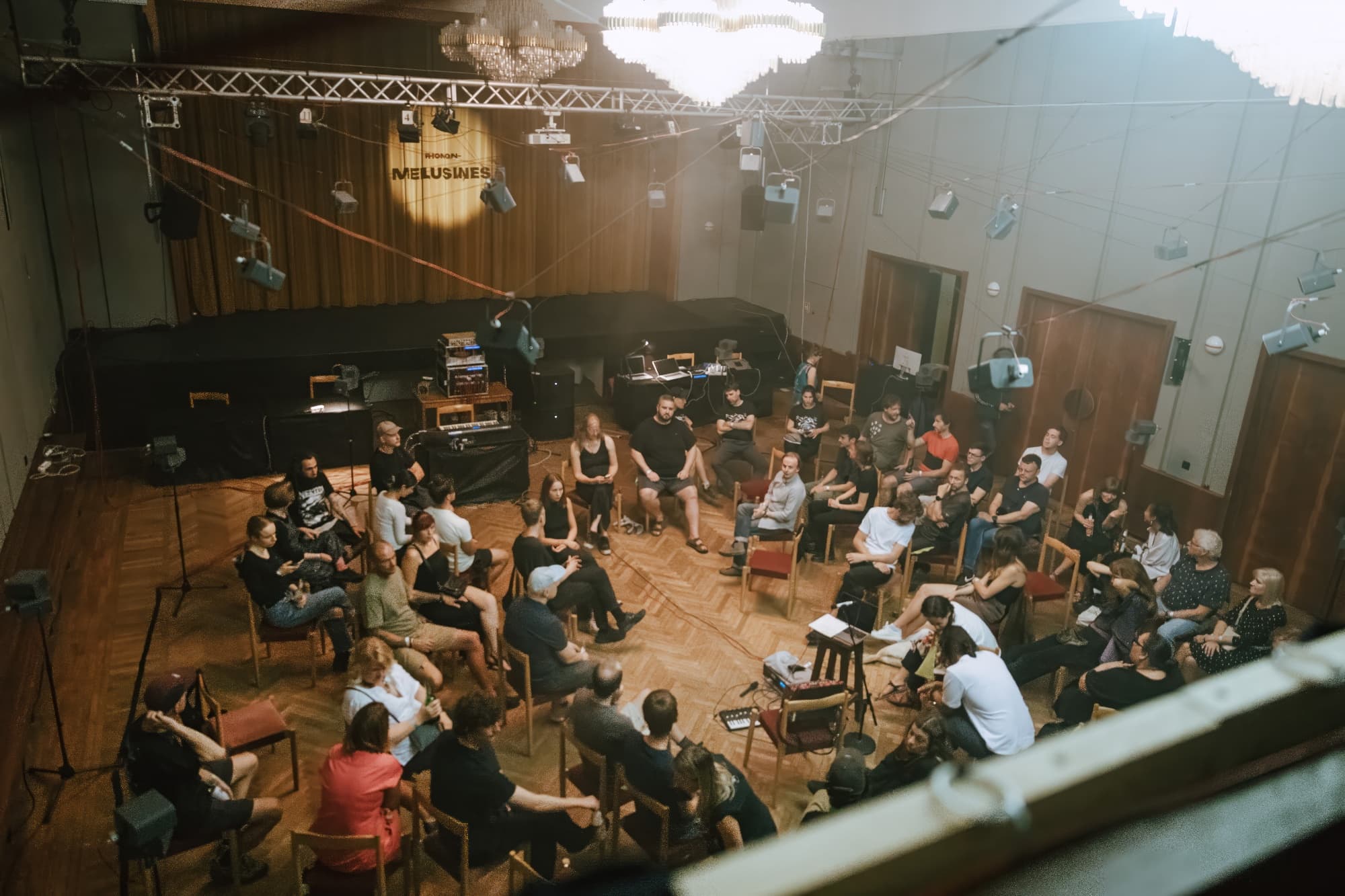
Contemplation on the role and potential contribution of DIY grassroots initiatives to the development of contemporary spatial audio field. The article unfolds through reflection on Ambisonic summer lab — an initiative made by artists for artists, built through collaboration, mutual help, and open exchange. By creating conditions and connecting people across countries, we aim to contribute to the emergence of a new scene for spatial music — one that values openness over competition, and curiosity over perfection.
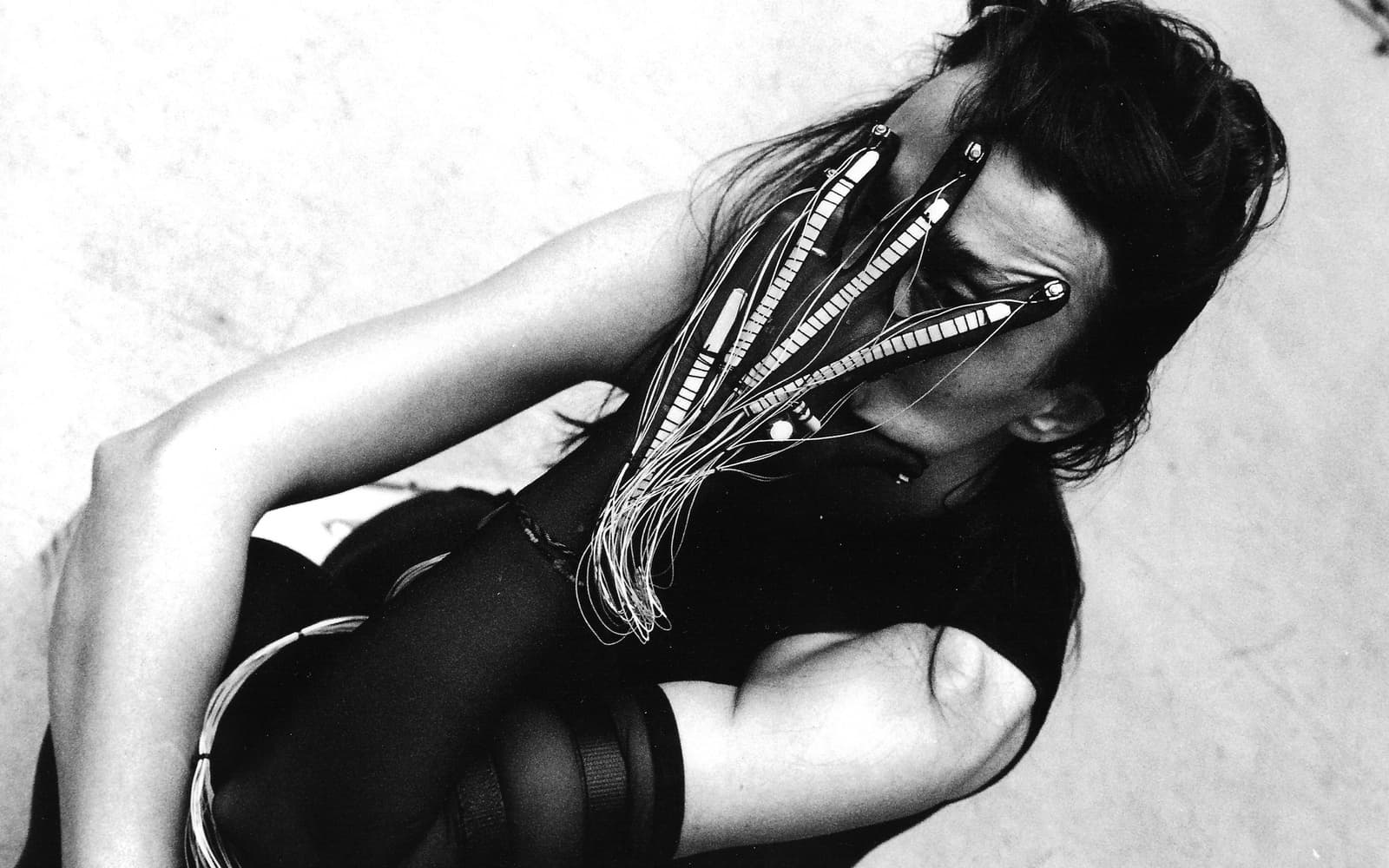
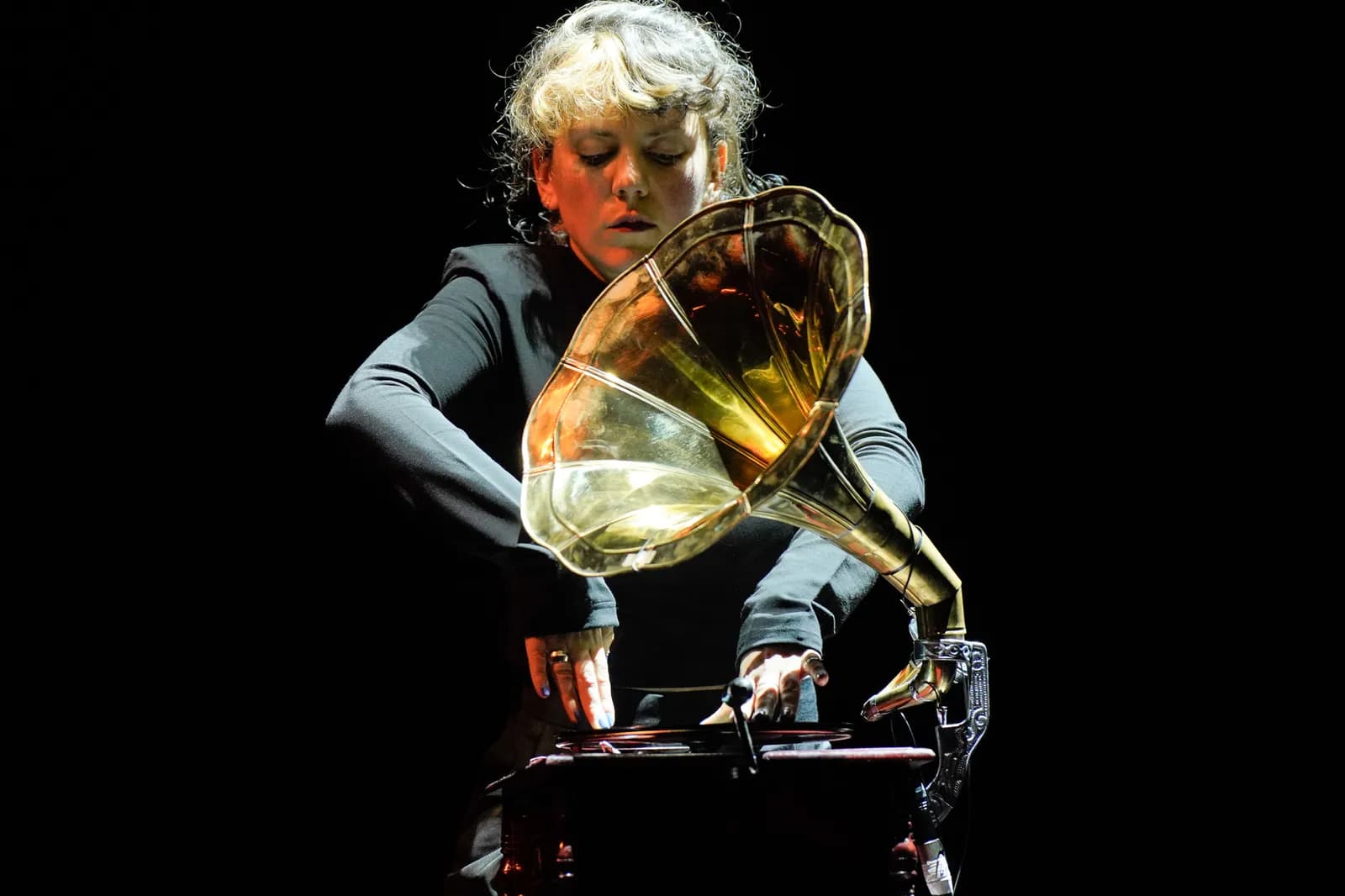
In A Song for Two Mothers and Occam IX, Laetitia Sonami and Éliane Radigue explore the transition from analog resonance to digital imagination. Paul DeMarinis reflects on sound, space, and time — connecting Radigue’s flowing Occam series with Sonami’s Spring Spyre instrument, where resonance, drift, and transformation become one continuous current of sound.
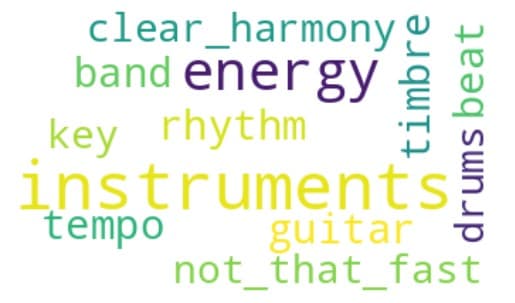
Concept-based explanations have emerged as an approach to make models explainable in a human-understandable way. In this article, we investigate extracted concepts for a music emotion recognition model. In a listening experiment, we explore properties of found concepts and show how to present them to users. The article is based on our paper and introduces only parts of our research. More information is provided in the paper.
Amidst the multitude of 3D audio formats like MPEG-H, Dolby Atmos, DTS:X and others, there is a new, open format emerging, IAMF. Let’s have a look at what it's all about and what it means for the future of immersive audio.
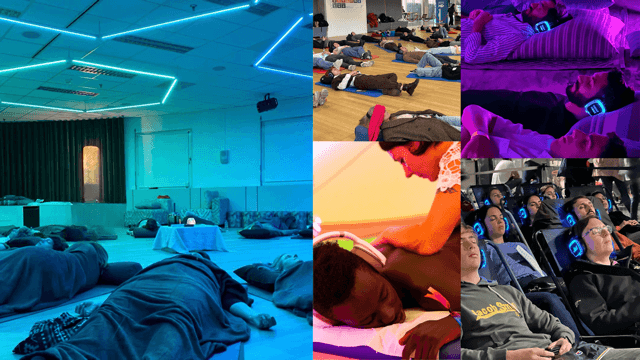
As a sound artist and producer, I explore how immersive audio reshapes modern well-being. Beyond stereo, spatial listening activates perception, emotions, and collective experiences. In this article, I’m going to show you how and why.
Francisco López delves into his decades-long work with autonomous sonic systems, which goes beyond today's prompt-based AI. From his visionary concept of a "sonic alter ego" to live performances by AI-driven entities such as PEPA and HARING, López makes a case for artistic collaboration with evolving, unknowable systems. It is a compelling call to embrace the potential of machine creativity and rethink what it means to compose.
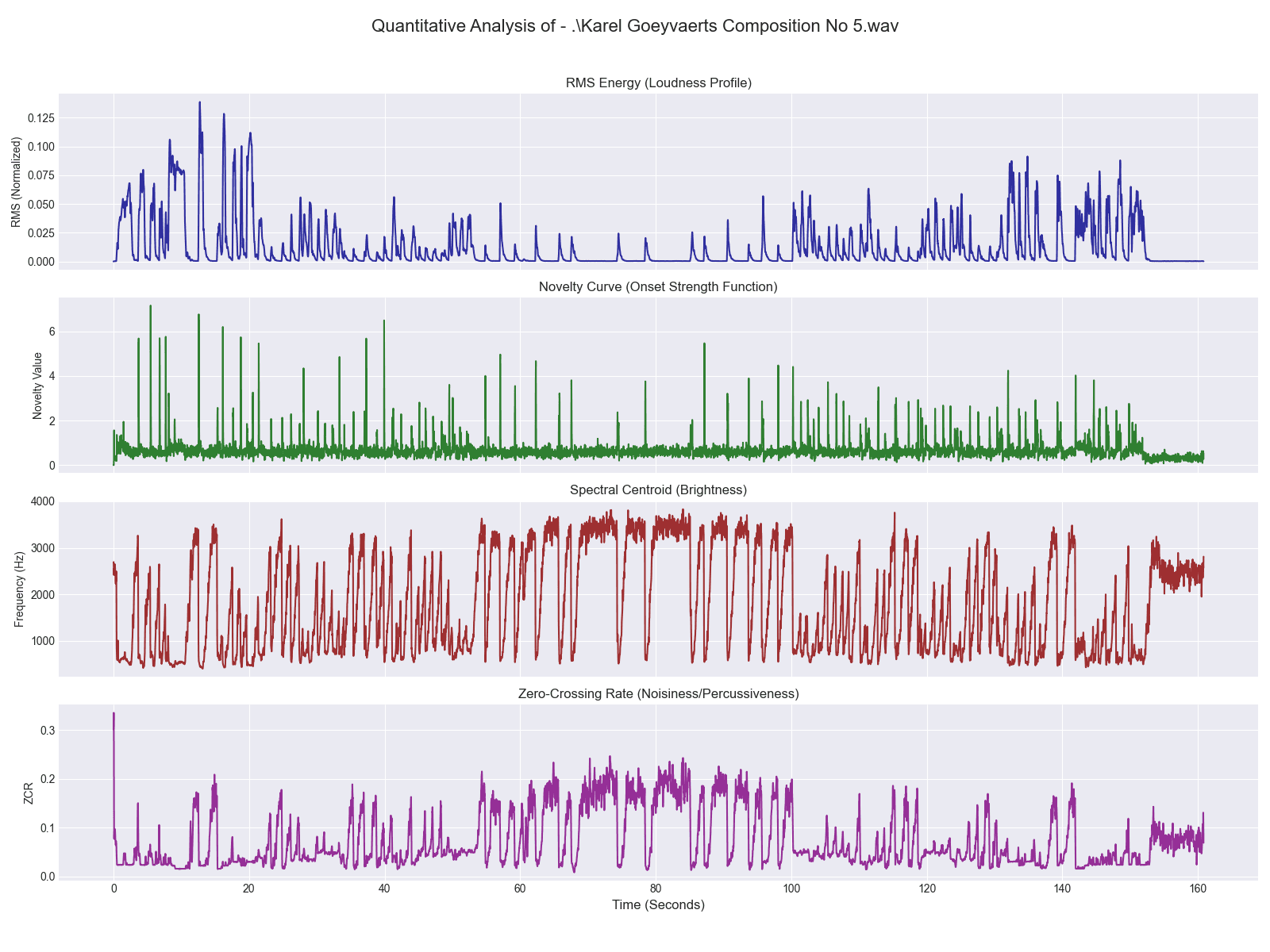
Analyzing complex and often abstract forms of sonic expression presents unique challenges, moving beyond traditional score-based methods focus on the inherent qualities of the sound itself. To address this, computational tools have become invaluable, offering objective insights into the sonic landscape of electroacoustic works. But how to apply these tools in real-life situations, and how to easily interpret data collected during analysis?
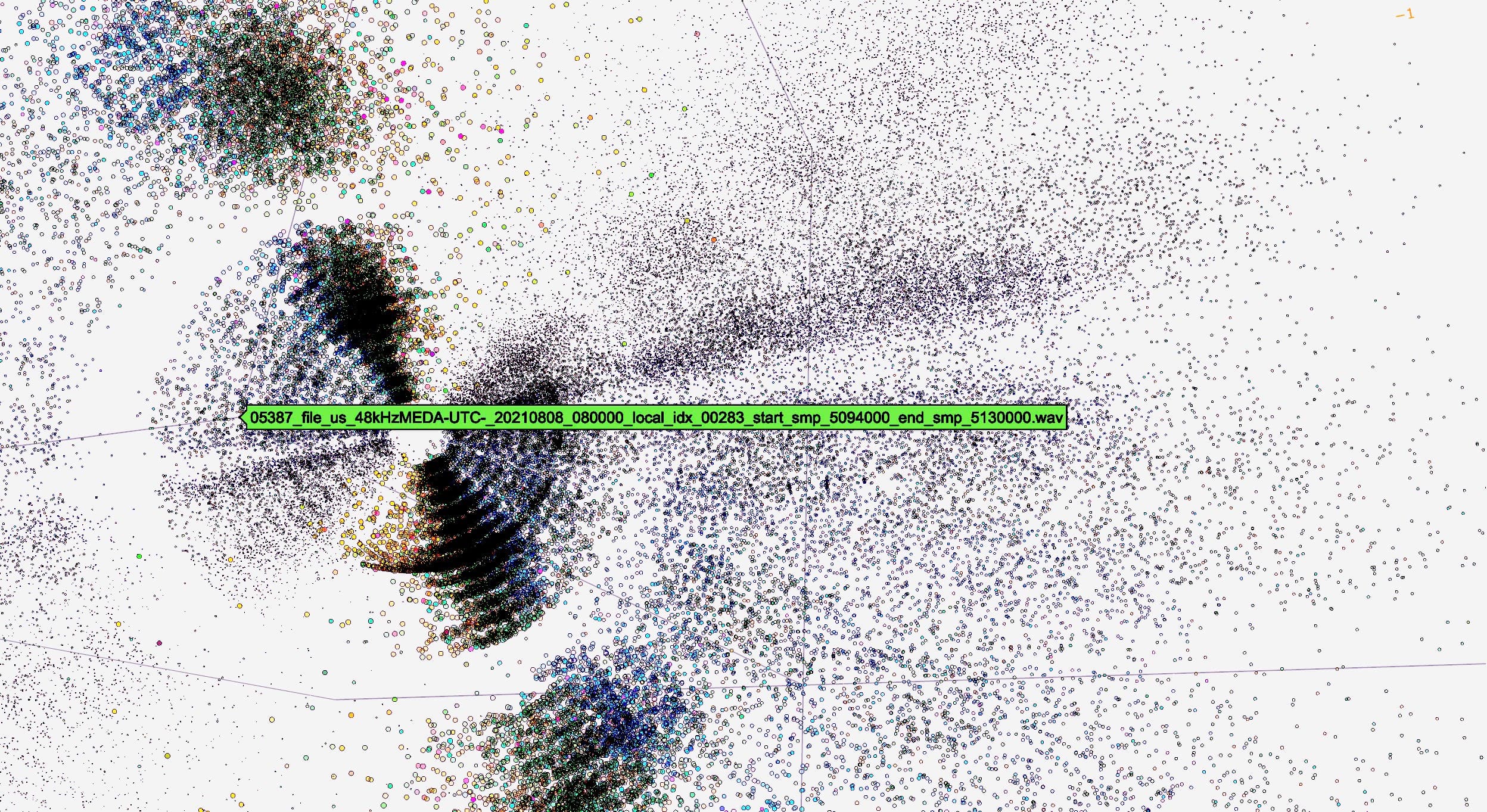
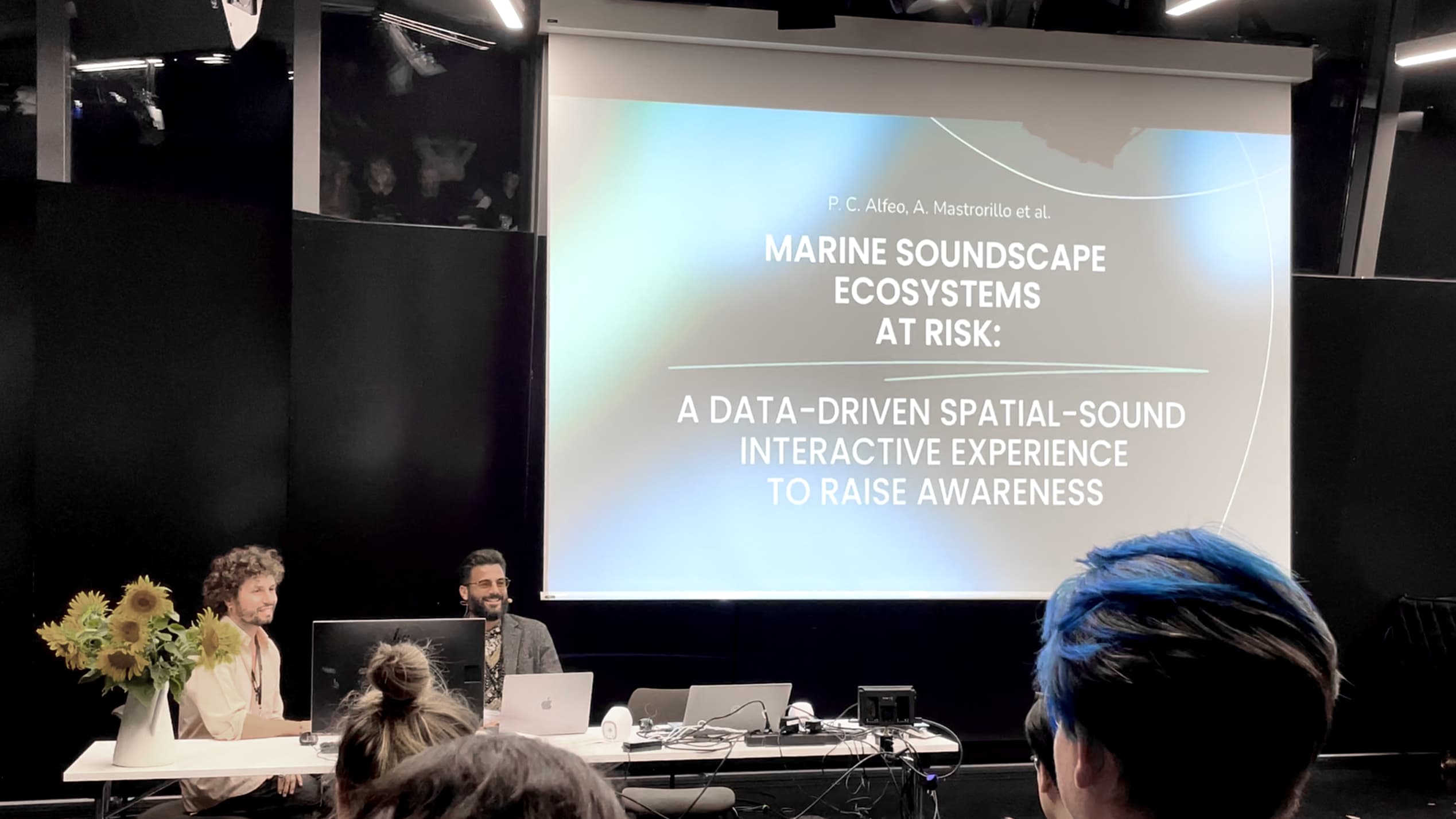
504 Ways Of Listening is an immersive interactive installation that transforms underwater acoustic data into three-dimensional soundscapes. It reveals the impact of human-made noise in the oceans and invites deep listening as a way to reconnect with marine ecosystems.
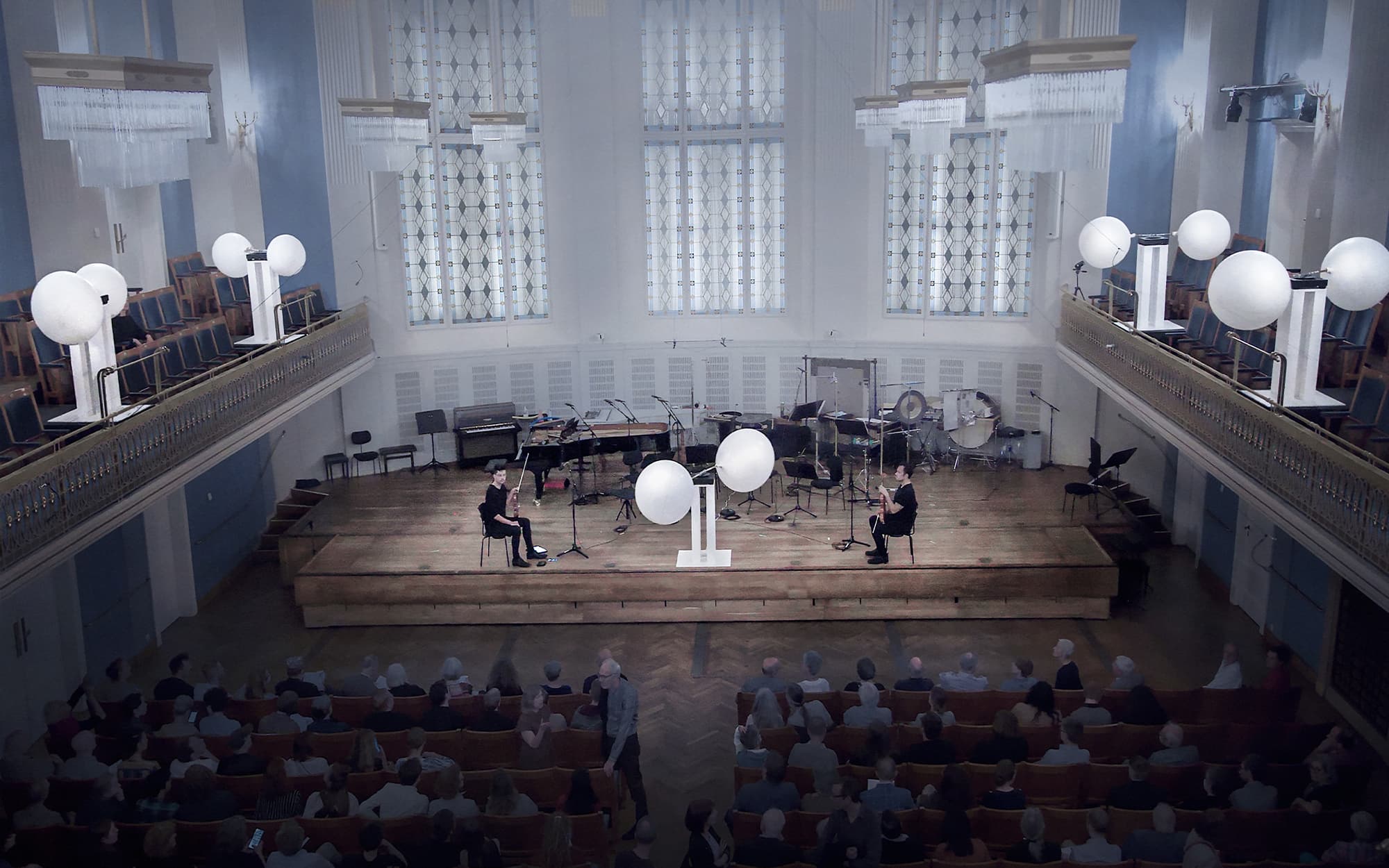
Whether you’re an artist searching for new ways to work with space and sound, or you run an art center, research lab, residency or a festival looking to expand what you can offer, the landscape of spatial sound is changing. This article is about those changes, the challenges many of us face, and a new approach leaving our Spatial Sound R&D Lab and entering the world — codenamed the "Singing Watermelons" — inviting the curious minds and unstoppable artists to help shape what comes next.
Converting multichannel electroacoustic compositions for headphone listening presents unique technical and artistic challenges. How do we preserve spatial intent while adapting to binaural playback?
Transmedia composition unfolds across multiple interconnected works using different media-constellations. This essay explores how the relationships between the works generate meaning, and how different modes-of-encounter invite various forms of perception and interpretive possibilities.
New research reveals how musicians truly connect with audiences: it's not technical perfection, but expressive and improvisational playing that drives emotional alignment—measurable through sound, brainwaves, and machine learning.
What happens to music when everyone becomes a composer? This article explores John Cage’s vision of an “anarchic society of sounds” as it unfolds in today’s participatory music culture. The narrative traces developments from historical experiments to generative AI, all informed by the author’s firsthand experiences.
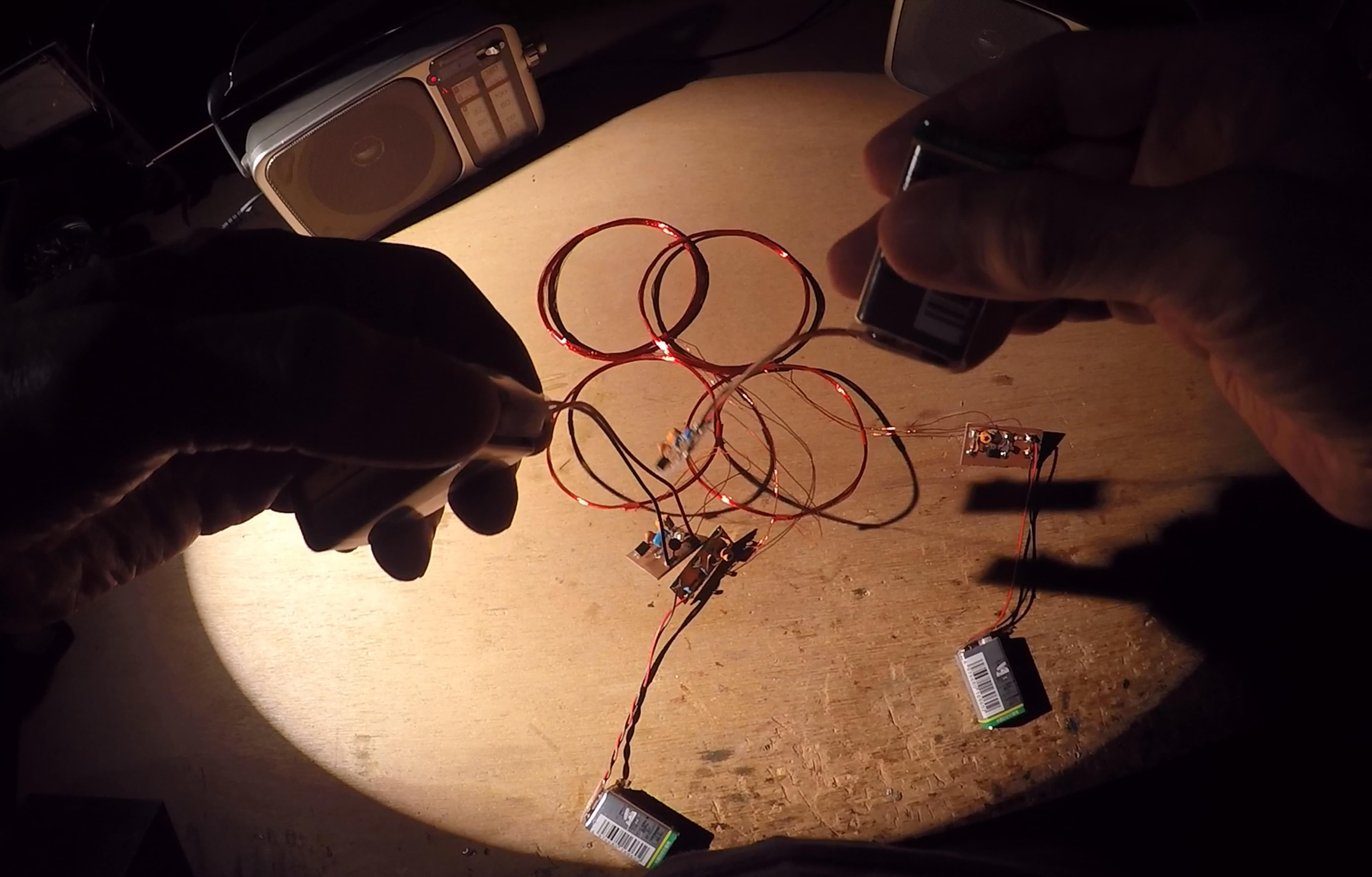
In an excerpt from Semi-Conducting: Rambles Through the Post-Cagean Thicket (Bloomsbury 2025), Nic Collins describes the origins in the early 2000s of his workshops and books on hardware hacking as a response to the lack of tactility in digital tools for sound.
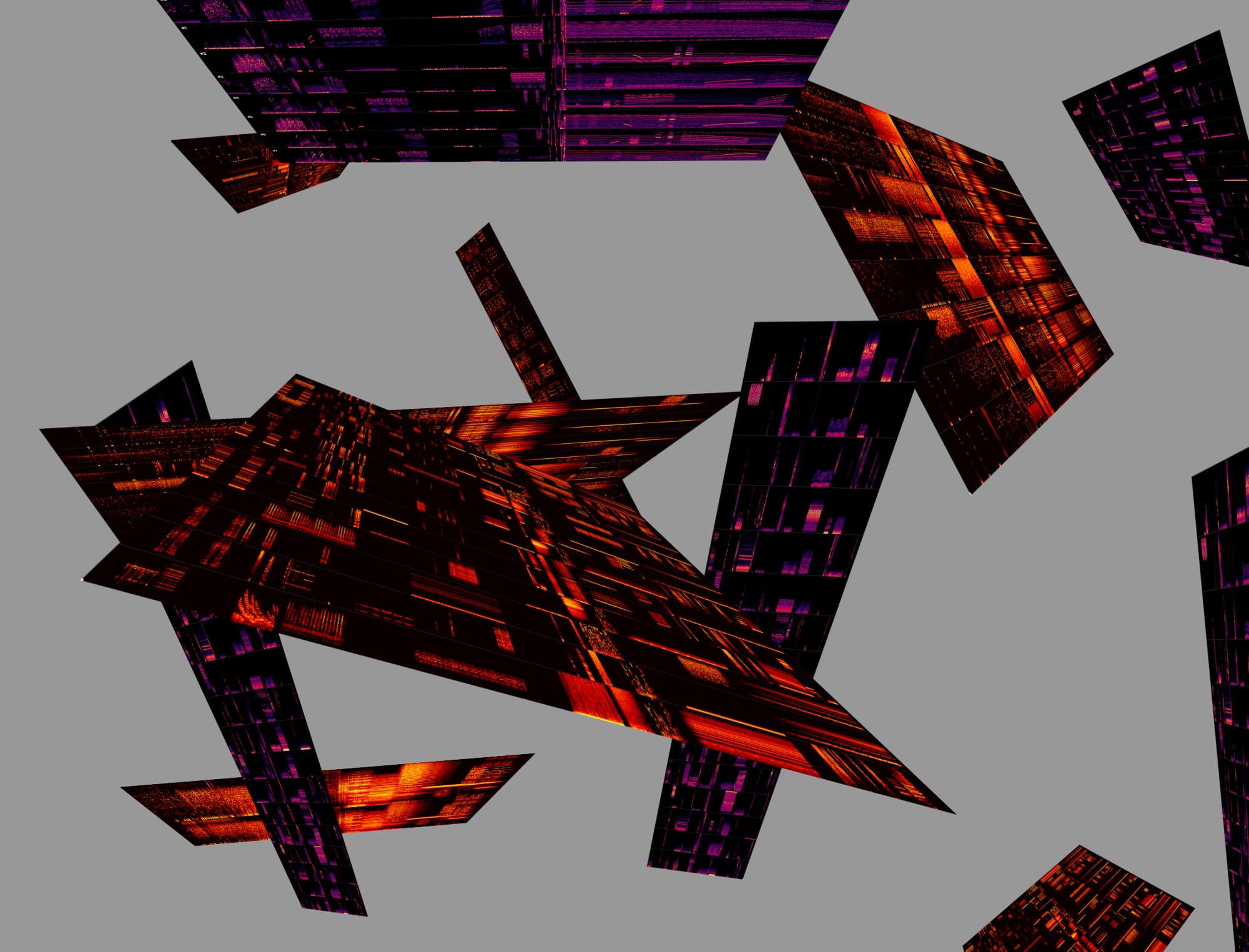
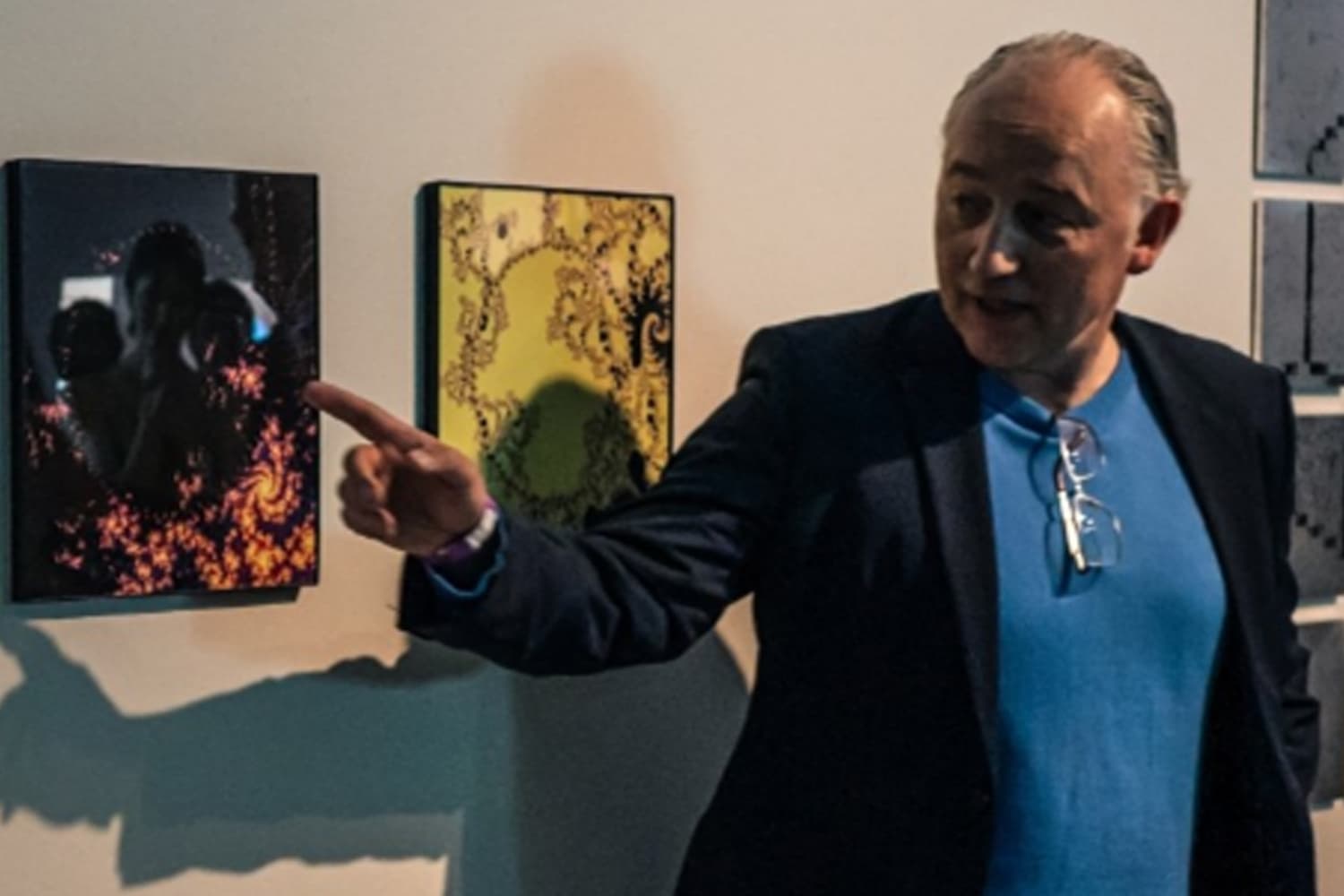
What does a quantum state sound like? What if the invisible dance of quantum bits could not only be heard but also seen? Here, we explore how quantum circuits become instruments of artistic expression, uniquely combining quantum music and fractal art - two fields never before merged - to generate visuals and sound shaped by quantum mechanics.
The 3rd age of multichannel diffusion research focuses on the design of so-called primary forest spaces. In order to specify a terminology that would better define the spaciotemporal metric of sound masses and the geodesic path of each of them in its curved space-time, the term volumiphony seems the most appropriate to define 3D multichannel diffusion.
Dynamic Time Warping is a method for analyzing time series. In my work, I use Dynamic Time Warping as a means to create transitions between sound sequences as compositional material. My article attempts to contextualize my aesthetic and technical approaches in relation to this algorithm.
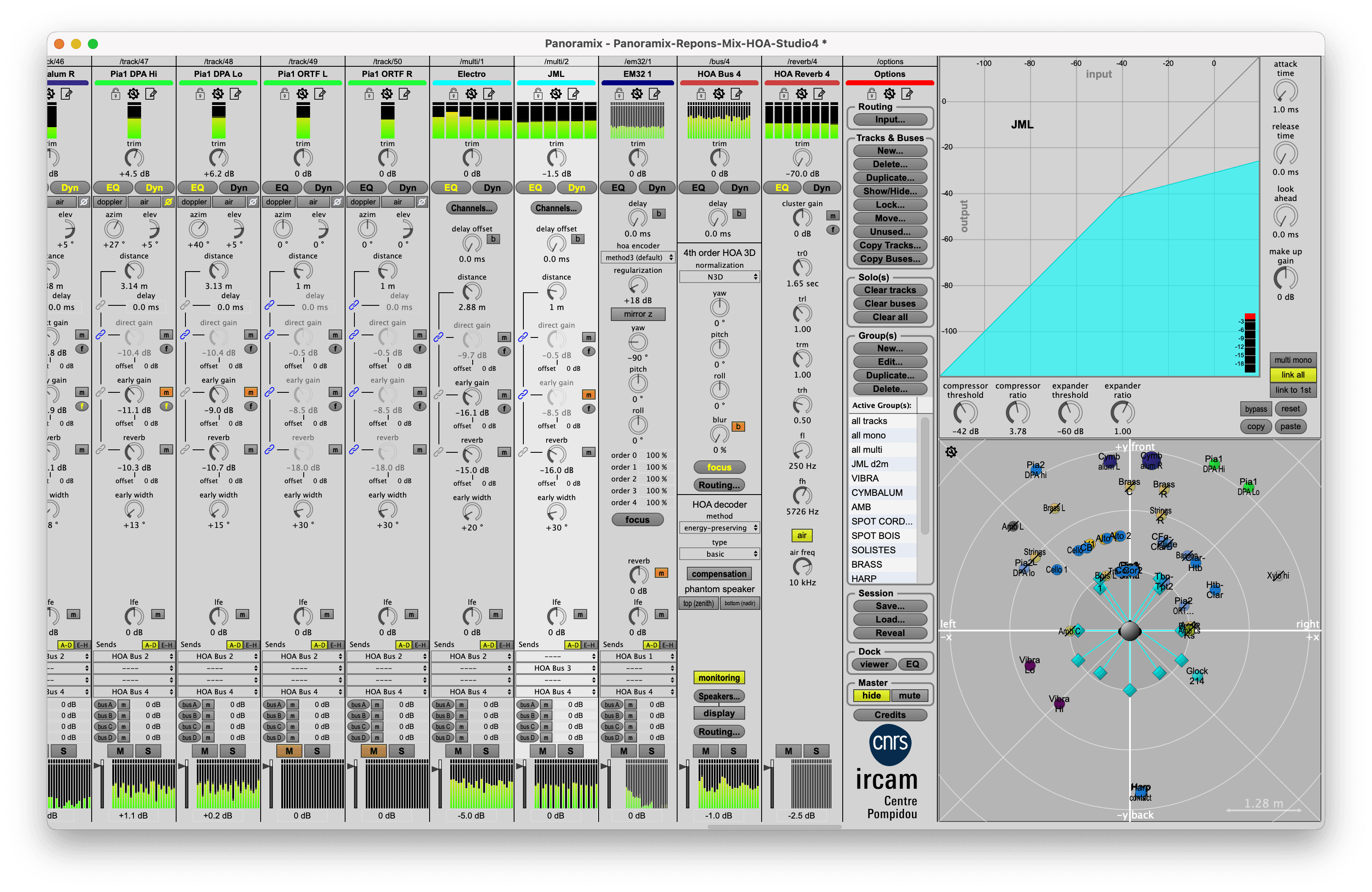
Ircam Spat is an extensive toolkit for spatial audio. Running in the Max environment, it features more than 300 modules, including audio processors, control objects, and graphical user interfaces, encompassing state-of-the-art spatialization techniques. Its highly flexible and modular design enables its use across various applications, such as concerts, mixing, post-production, virtual and augmented reality, sonic installations, and sound design. This versatility makes Spat a Swiss army knife for spatial sound.
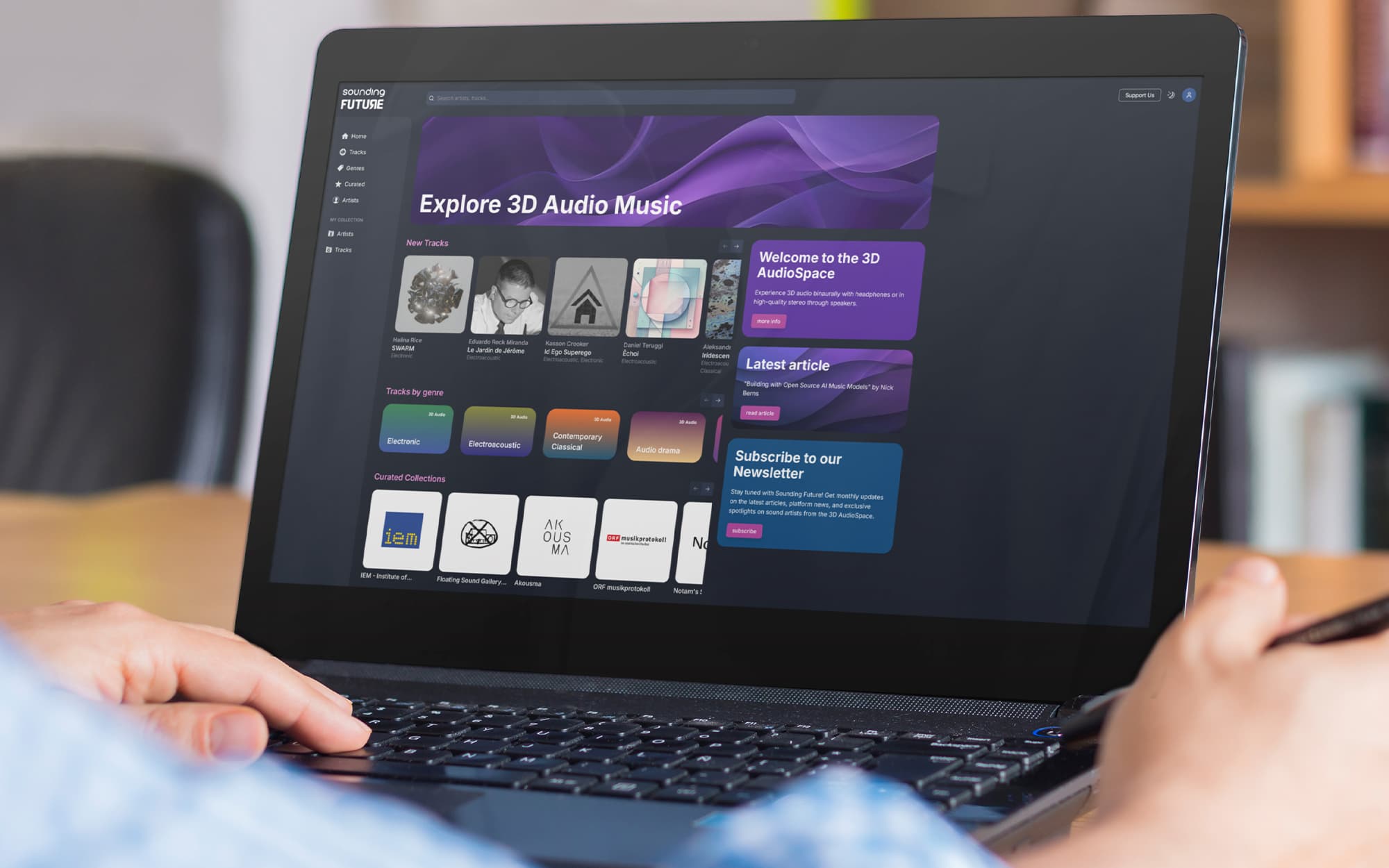
In the 3D AudioSpace of Sounding Future, artists present their audio tracks in high-quality 3D audio. To kick things off, I'm introducing the features of the new audio streaming platform here.
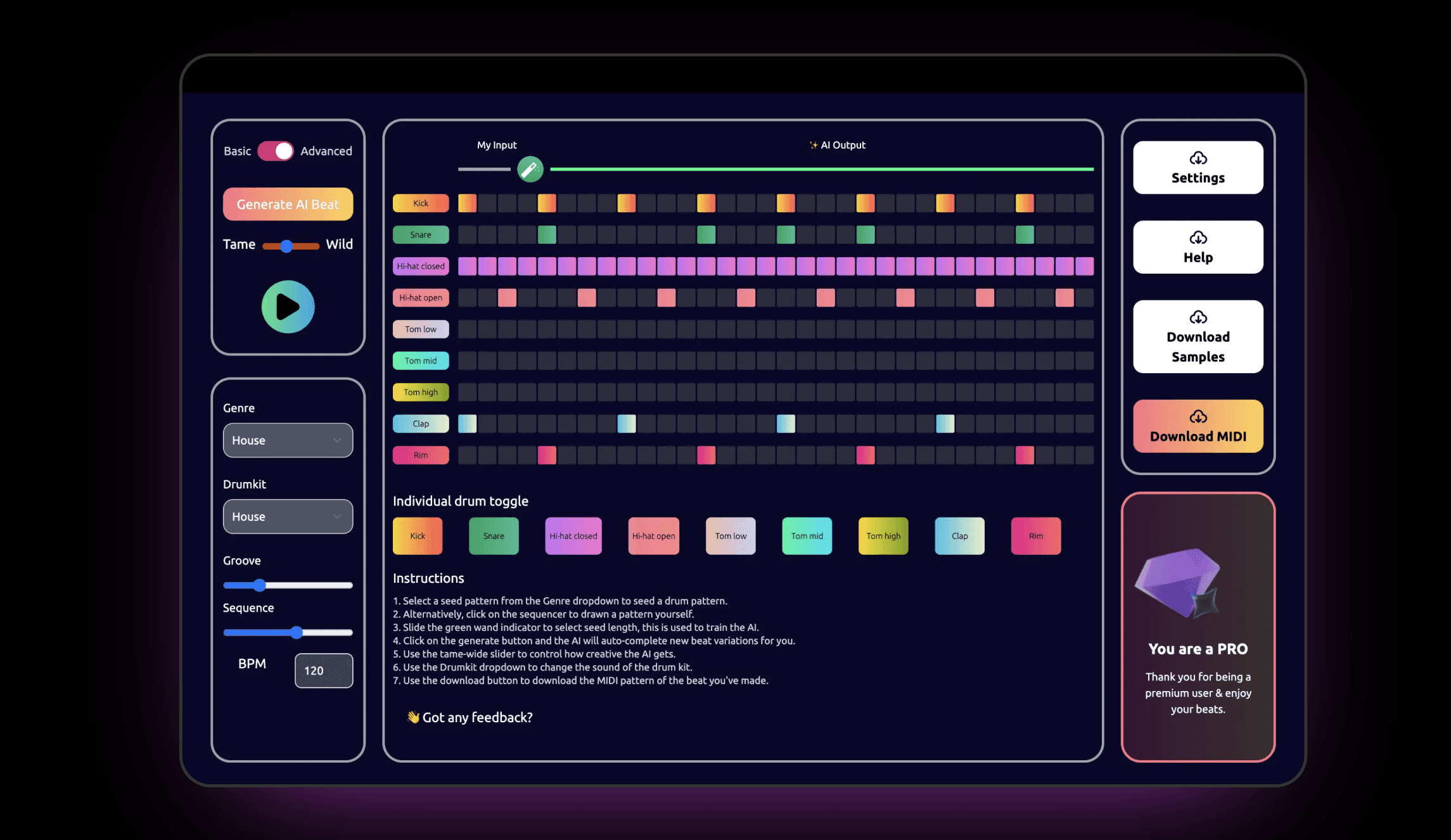
We’ve been hearing a lot about AI music over the past year. But several years before this recent wave of audio generation, big tech companies like Google and OpenAI were testing the waters with open source AI music models. This inspired me to build DrumloopAI, a beat generator that offers an easy-to-use interface and pleasant user experience and is now used by over 65,000 beatmakers around the world.
Speculative Sound Synthesis is an artistic practice, a philosophical concept, and a research method. It is an approach to sound synthesis that challenges conventional methods of sound creation and interaction by interrogating the fundamental relationship between artistic practice and technology. In this article, I will briefly introduce Speculative Sound Synthesis, present its conceptual background, and examine several artistic case studies.
Being a sound designer in the XR industry for over 8 years, I’ve tried many different things. Some worked, some failed. Some worked for a period of time and then the technology changed and I had to revisit what I thought I knew. Here are some of the insights I gathered over time.
As an artist, I have always been interested in social and physical systems of order and communication – the relationships between people and things.
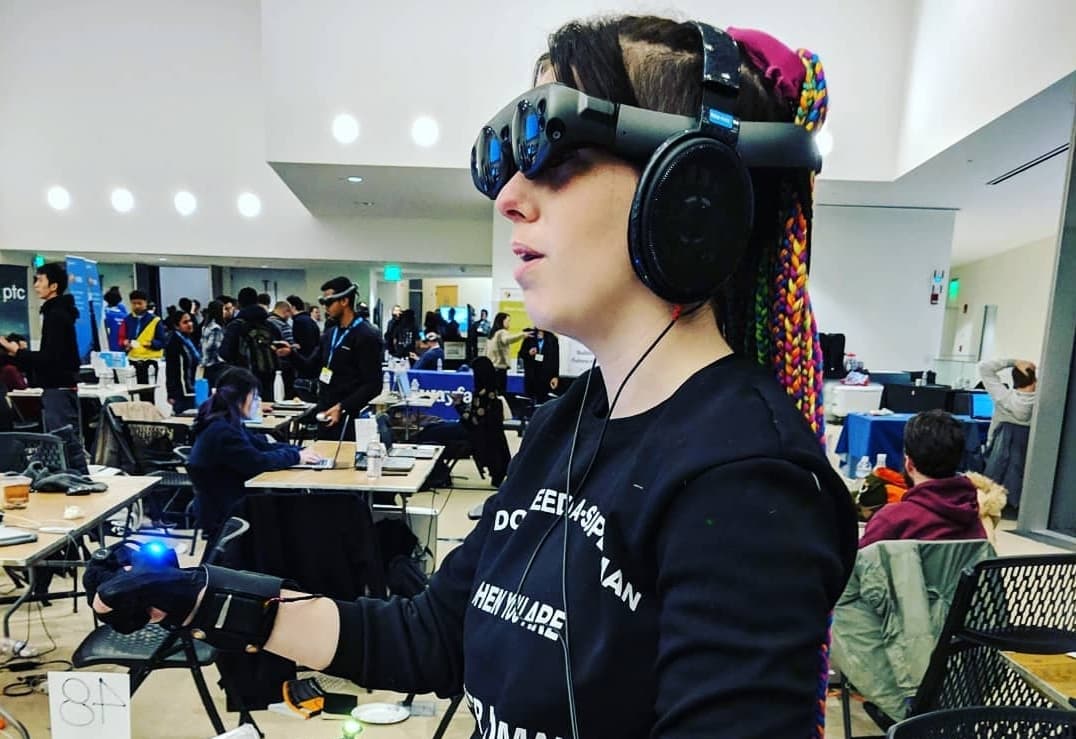
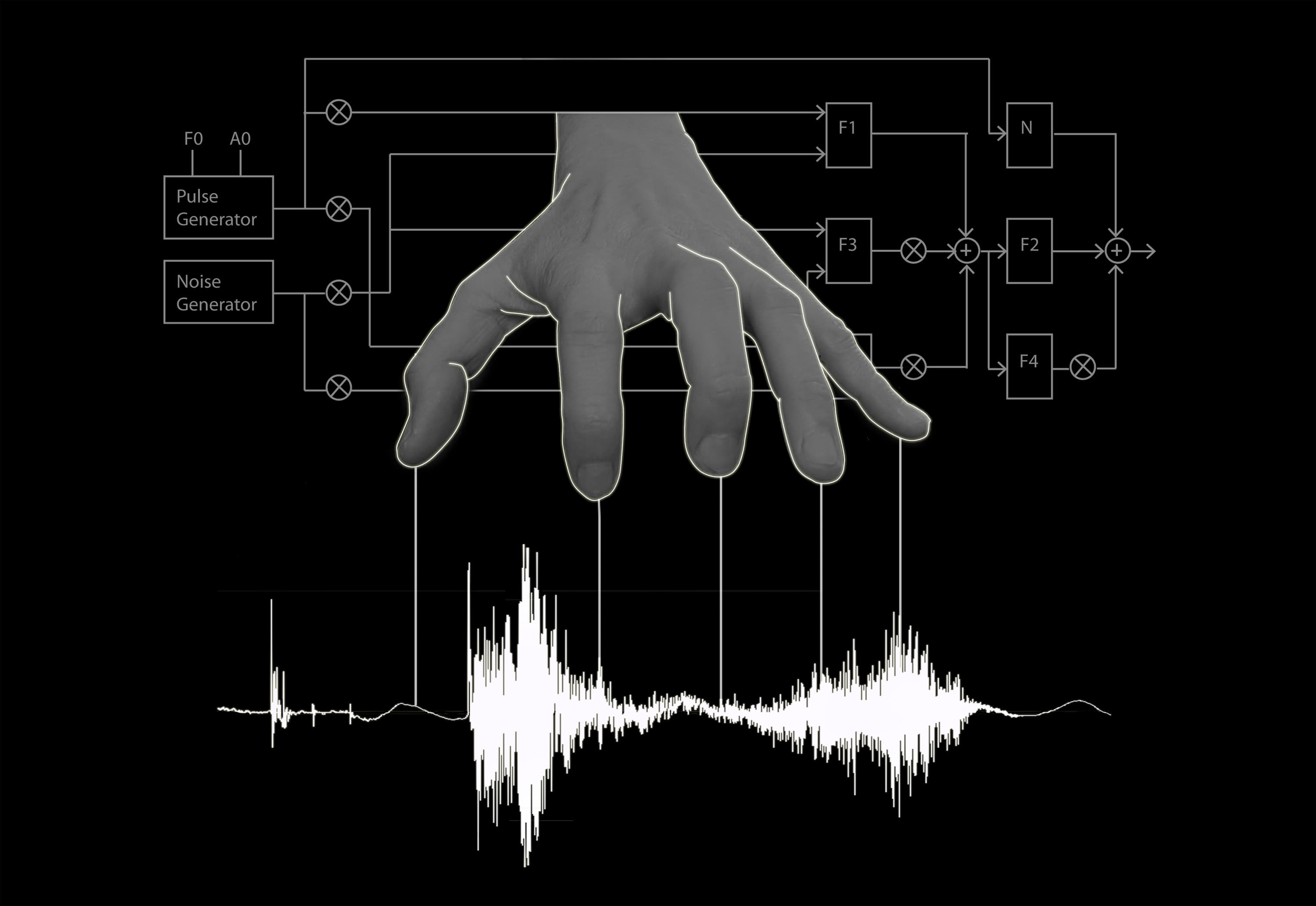
On the development of experimental interfaces for the world's most complex instrument and the gestural and haptic control of artificial voices in live performances.
Legal battles dominate AI music in 2024, but the spotlight shifts to AI filmmaking, where the demand for dynamic film scores is growing. Current AI tools lack orchestral richness and adaptive workflows, but innovators like Audio Design Desk hint at the next wave: intuitive, powerful AI music tools tailored for video creators.
People walk past each other on the street, each at their own pace. They pound at different speeds and distances. My tempolyphonic musical work takes this as a starting point.
For over a decade, I’ve helped artists navigate the immersive audio world, adapting and enhancing their work across a wide range of multichannel and 3D sound setups. From emerging talents to icons like Nicolas Jaar, Murcof, and Suzanne Ciani, I’ve witnessed many common challenges – both creative and technical. Here’s a selection of some battle-tested tips to get ready for anything.
To what extent is artificial intelligence changing the way music is produced? Markus Deisenberger talked to five renowned music producers (Wolfgang Schrammel, Thomas Foster, David Piribauer, Zebo Adam and Georg Tomandl) about the upheaval in the markets, the associated losses and opportunities.
In part 3 of the Music and AI series, Markus Deisenberger deals with the copyright issue of "man vs. machine" and poses the essential question in the context of participatory democracy: "How do we want to shape AI? And what does the development of AI have to do with the invention of the railroad?
In part 2 of the series on AI in music, Markus Deisenberger explores the question of why AI threatens to dissolve copyright law like a pinch of salt in the digital sea of data, analyzes opportunities and possibilities for the education sector and raises urgent questions about transparency, fairness and diversity in the development and use of AI.
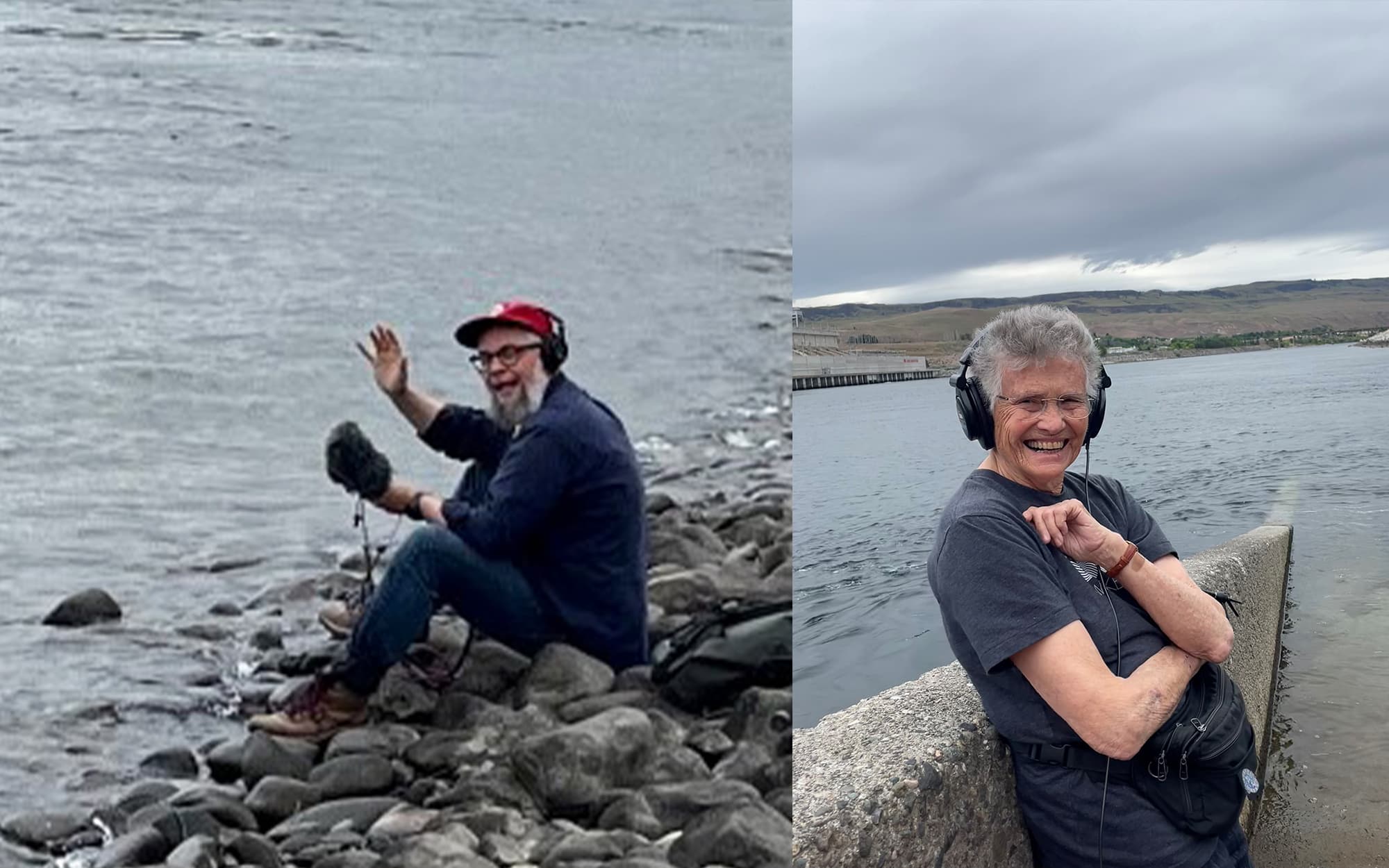
Annea Lockwood and Nate Wooley began documenting the sounds of the Columbia River in early 2024. In this conversation, Lockwood and Wooley reflect on the first weeks of recording – from Astoria, Oregon, to the Canadian border – and the discoveries they have made in their attempt to reveal the unique and controversial history of the river through sound.
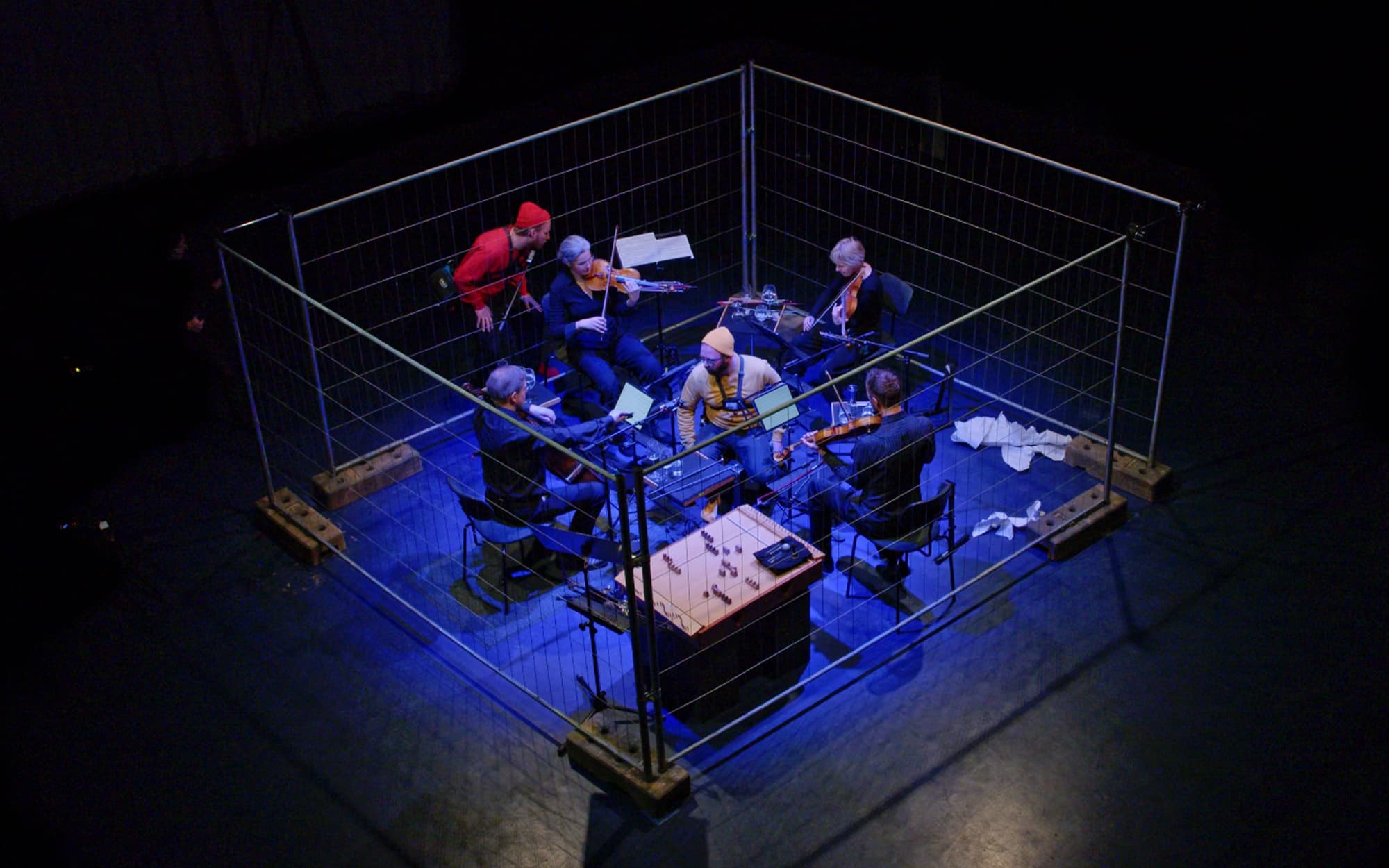
We present SOUNDDRAMATURGIEN: As a collective, we design performance formats for head-listening audiences - always with the vision of shaping audible space as a narrative parameter. Field studies, discourse, and laboratory situations should lead us to nothing less than a universal theory of 3D audio.
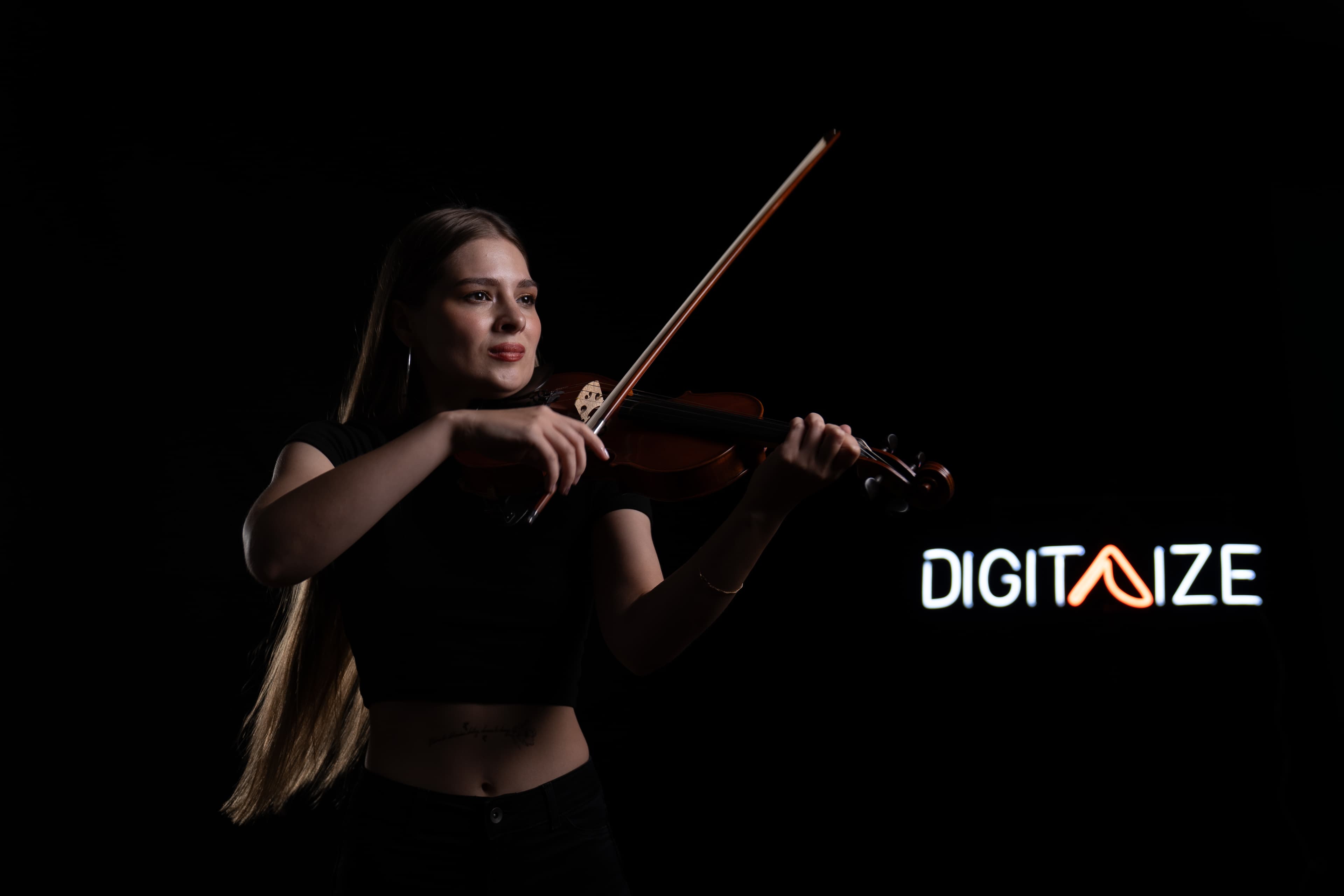
Classical musical instruments reinvented. Digitaize is the unique technology that creates a symbiosis between analog and digital and opens up unique possibilities of expression for musicians.
Artificial intelligence is changing the professional world, including that of musicians. But what do music creators have to fear from AI? Will AI use their work without having to pay for them? Will AI even replace them, or devalue their art? And what happens to works created using AI? Do they enjoy copyright protection?
A look back at the 3D Audio Production Competition for Students 2024. The winners present their compositions. The audio tracks can be listened to using a 3D audio player with head tracking.
In this article, I examine the principle of overwriting and meta-composition in my series of 41 Monadologies, with a particular focus on the overwriting of Schubert's Winterreise in the cycle Cold Trip (Parts 1 and 2).
This article discusses technical aspects of the album site-unspecific and the composition Still Life, from its production in spatial audio environments to its final reduction to stereo format.
On the symbiosis of rotating sound installations and interpreters and the resulting expansions in sound and space. 2 examples.
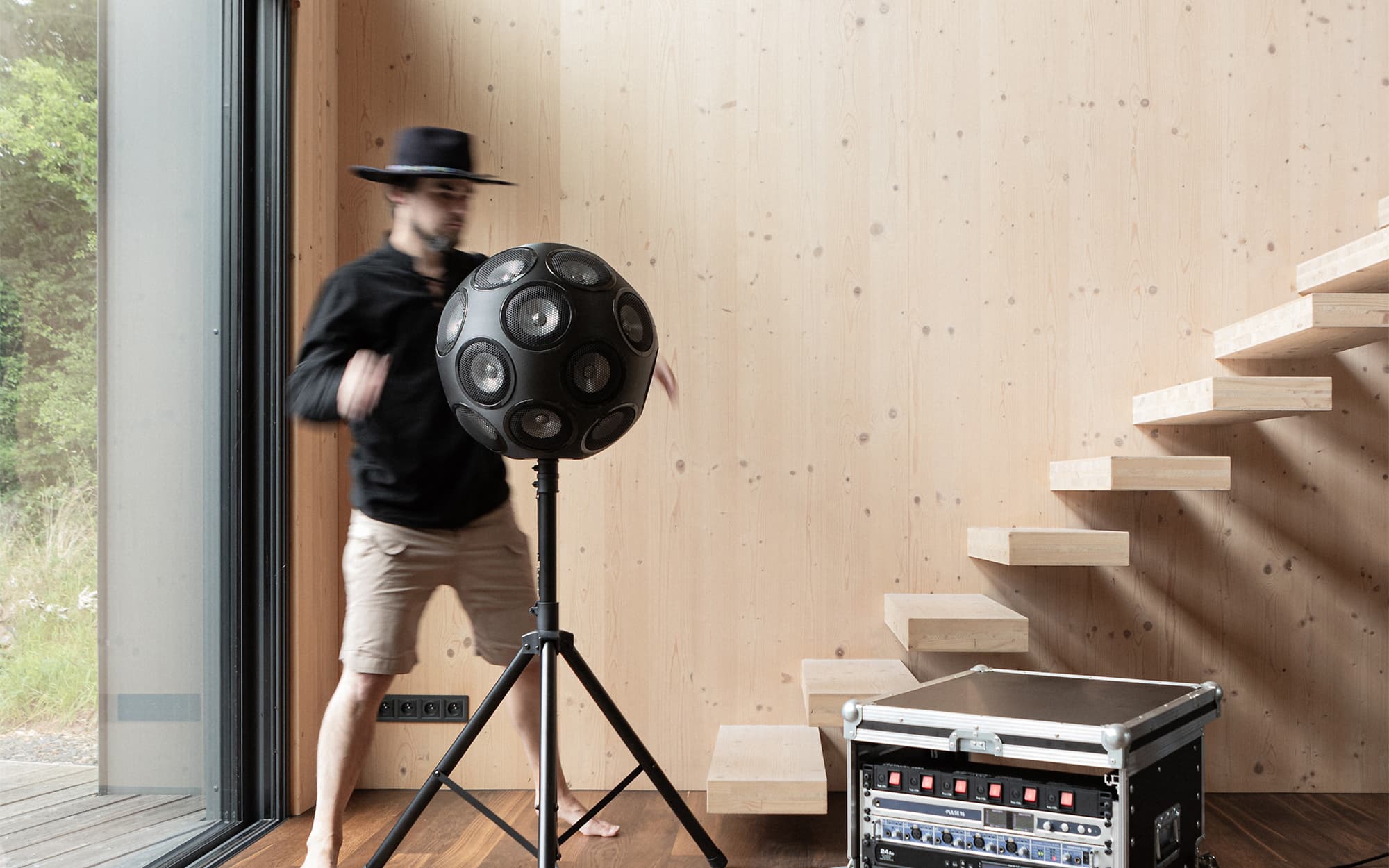
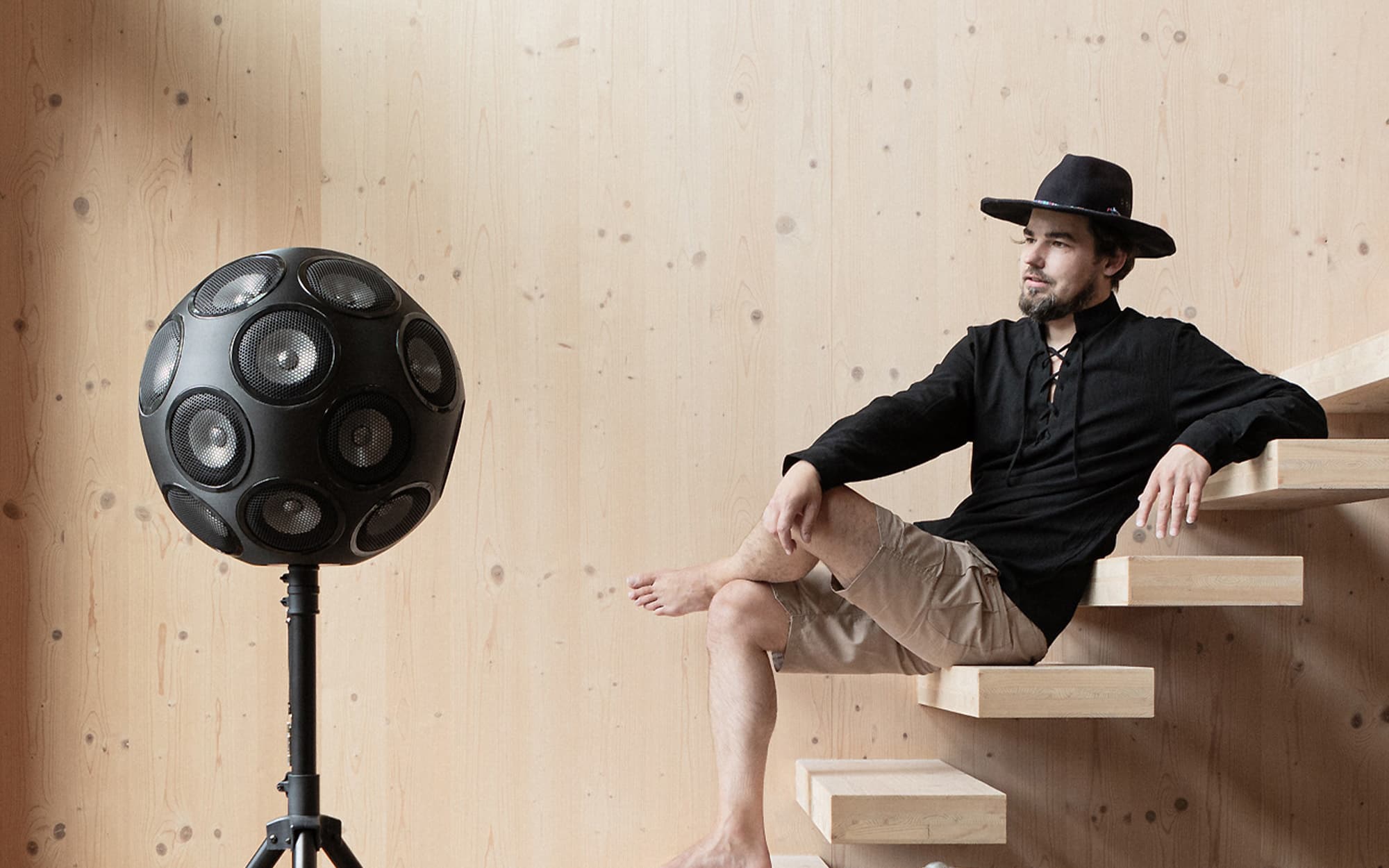
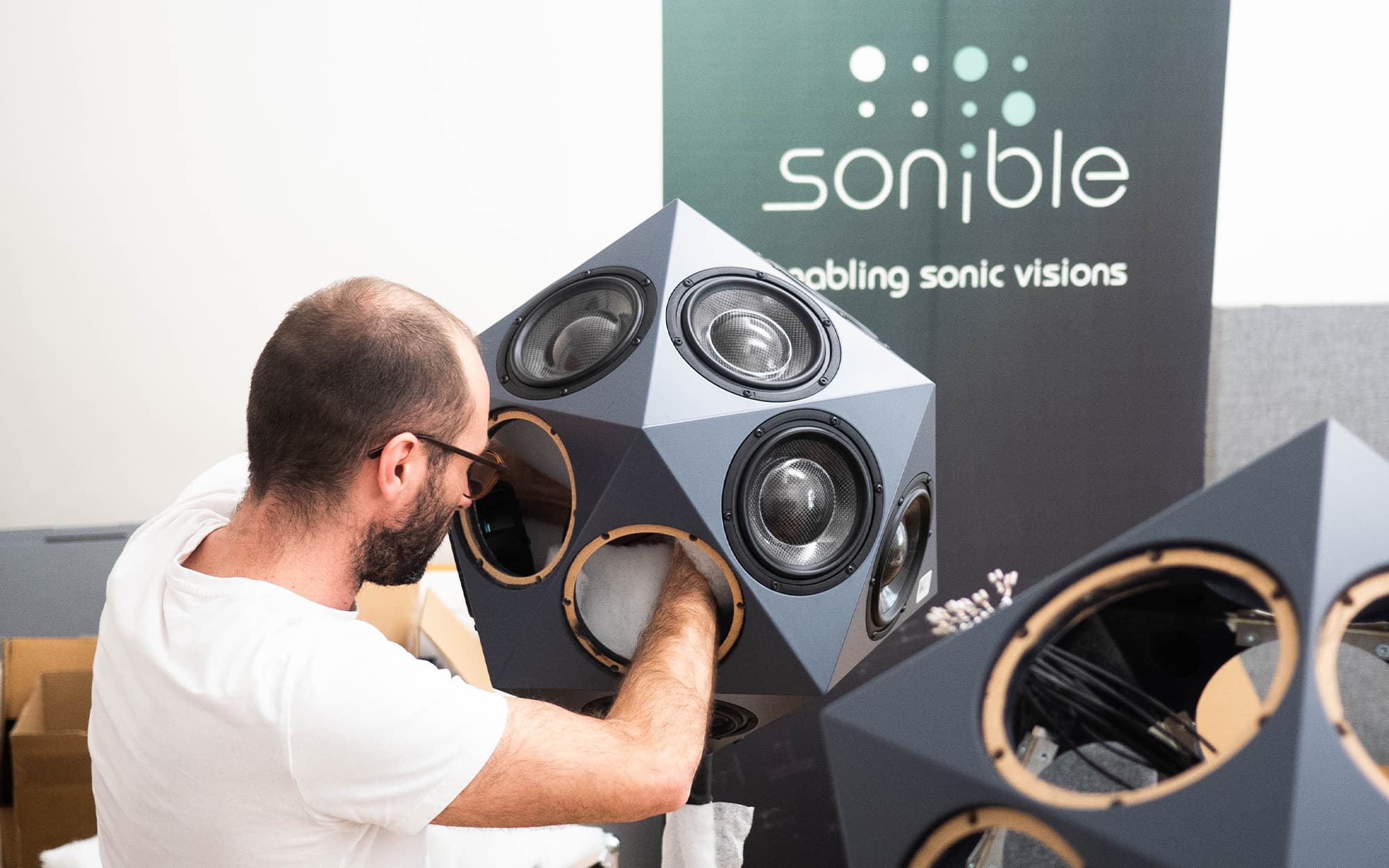
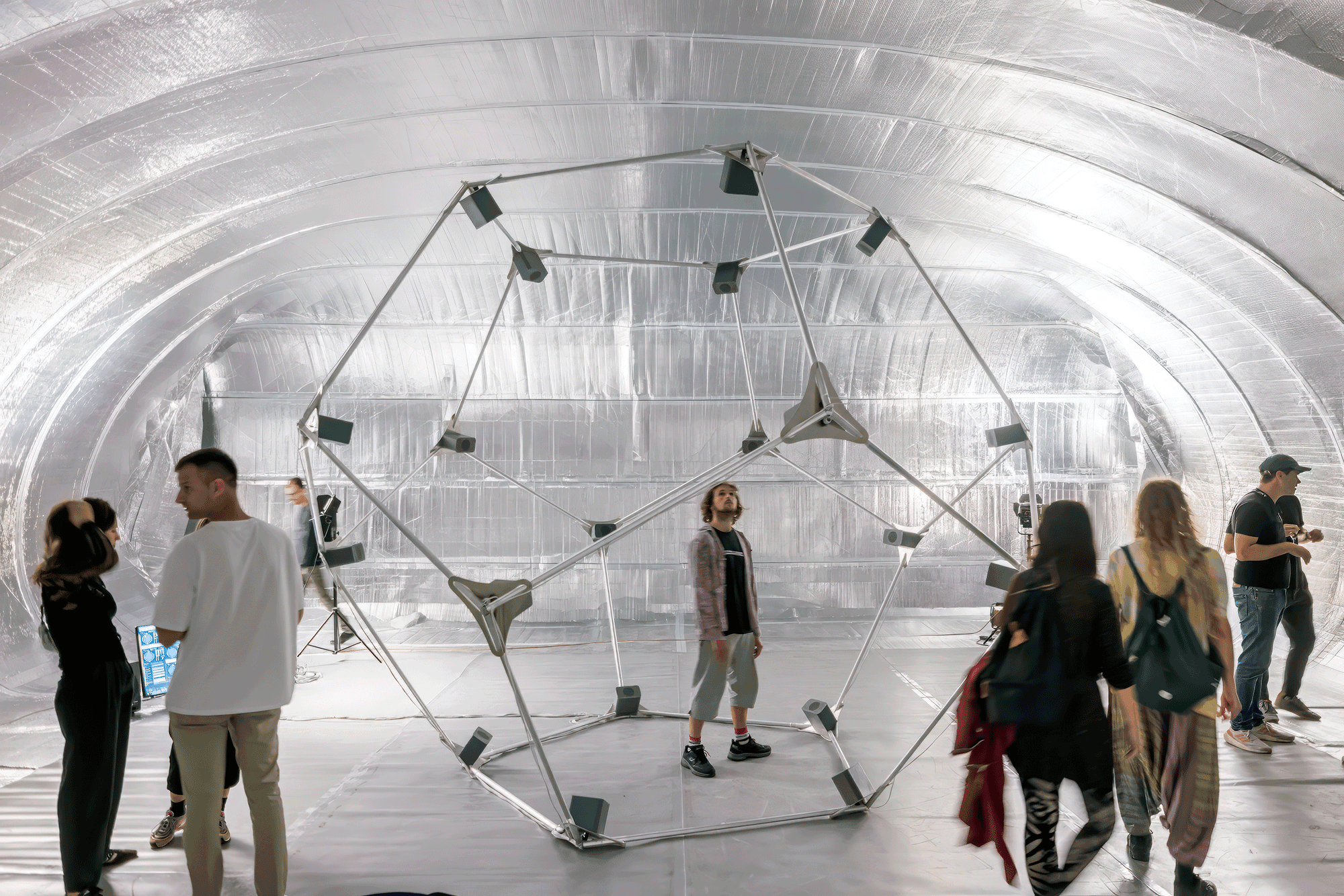
Whether hanging from a church tower as a ticking modernist anticlock, as part of an immersive sound experience in archaeological shelters, or as a tool that can interpret compositions as sculptures – IKO, the world's most compact loudspeaker system based on 3D audio technology Higher Order Ambisonics, is making a lasting impression internationally.
Bridging the Realms of Architecture and Quantum Physics This article delves into the intersections between sound spatialization, synesthesia, and quantum physics, exploring how these overlapping fields can provide new creative avenues inspired by scientific insights.
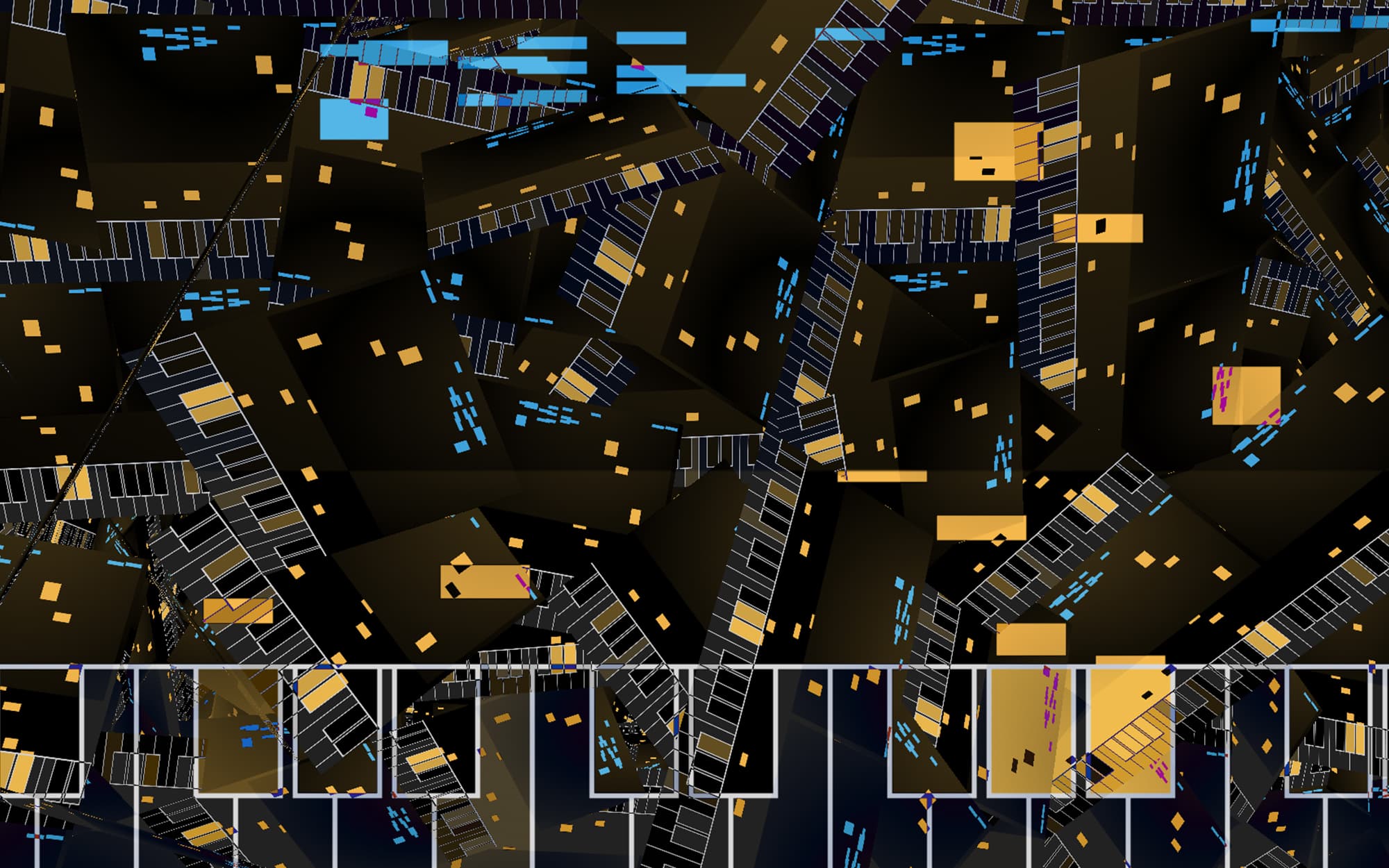
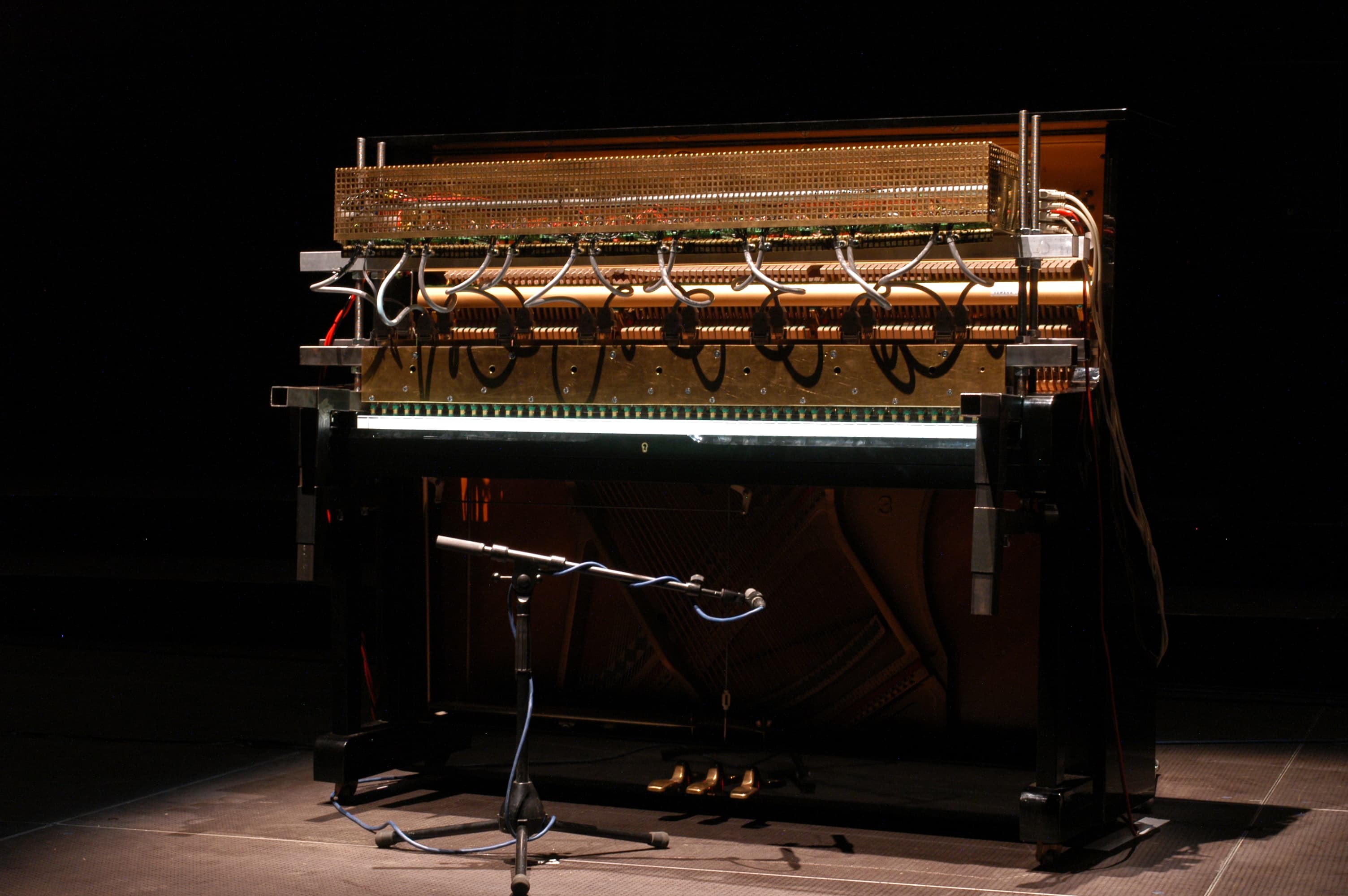
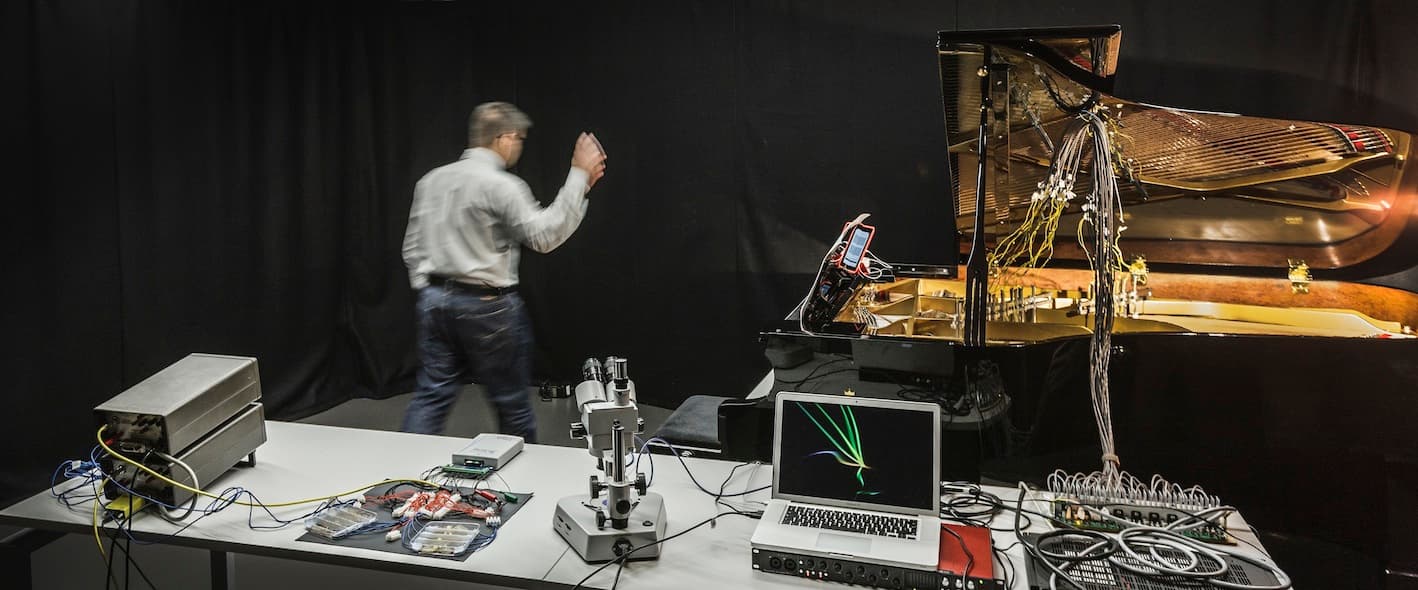
The piano player automaton allows composers to realize what is "unplayable" for human beings, be it the most precise time structures, enormous speeds, the most diverse tempi at the same time, or simply an incredible number of notes. (Florian Gessler 2004)
This article series focuses on the evolution of generative audio models. Part 1 explores aleatoric processes, inspired by Xenakis’s pioneering use of mathematical techniques and their influence on the author’s Cosmosf applications. Spanning 20 years of development, the study highlights the integration of stochastic processes, real-time synthesis, and modern technological advancements.
What happens when sound itself redefines the space around you? Two compositions explore this question—one interweaves piano, thunder sheet, and fishing lines, while the other amplifies the viola d'amore’s resonant body into a vast dialogue, challenging our perception of sound and space.
A ground moraine of erratic thoughts along with mannered and mannerist micro-sermons (in textual form) on text, music and theatre.
Quantum computers are increasingly being explored for artistic purposes. In our aesthetic seduction experiment, we have created a jazz-quantum fractal-film by merging abstract art - fractals - generated based on jazz analyzed on a quantum computer and generative AI.
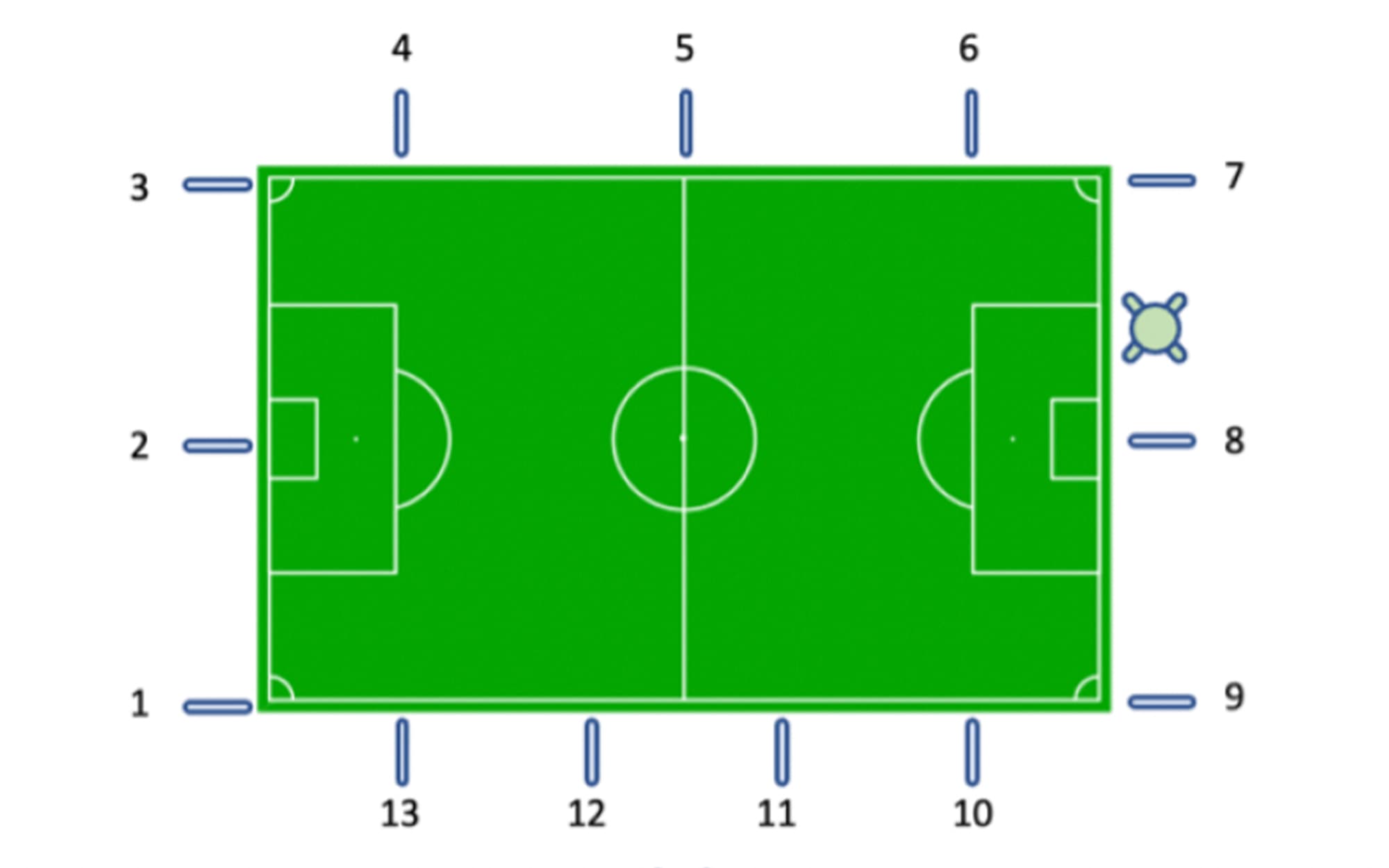
This practical report explains the technical implementation of the broadcast of the 2022 FIFA World Cup in two variants, firstly as a revolutionary broadcast transmission and secondly as a streaming service for a specially developed app. It also shows how soccer broadcasts can be made more efficient and attractive using machine learning and MPEG-H audio.
"Proyecto Carrusel" is an independent research and development project in audiovisual immersive art, from which we have created a multi-platform app for immersive art, in 3D image and sound for mobile use, computers, and virtual reality for use in browsers.
In this article, I outline how the Sounding Future content platform will be expanded in a further project phase to include a 3D audio area with a head-tracking function.
Have you ever wanted to jam over the internet with your favorite DAW or audio programming language? Or stream sound from your computer to mobile devices? Or build your own wireless microphones or speakers? Then the AOO library may be exactly what you are looking for!
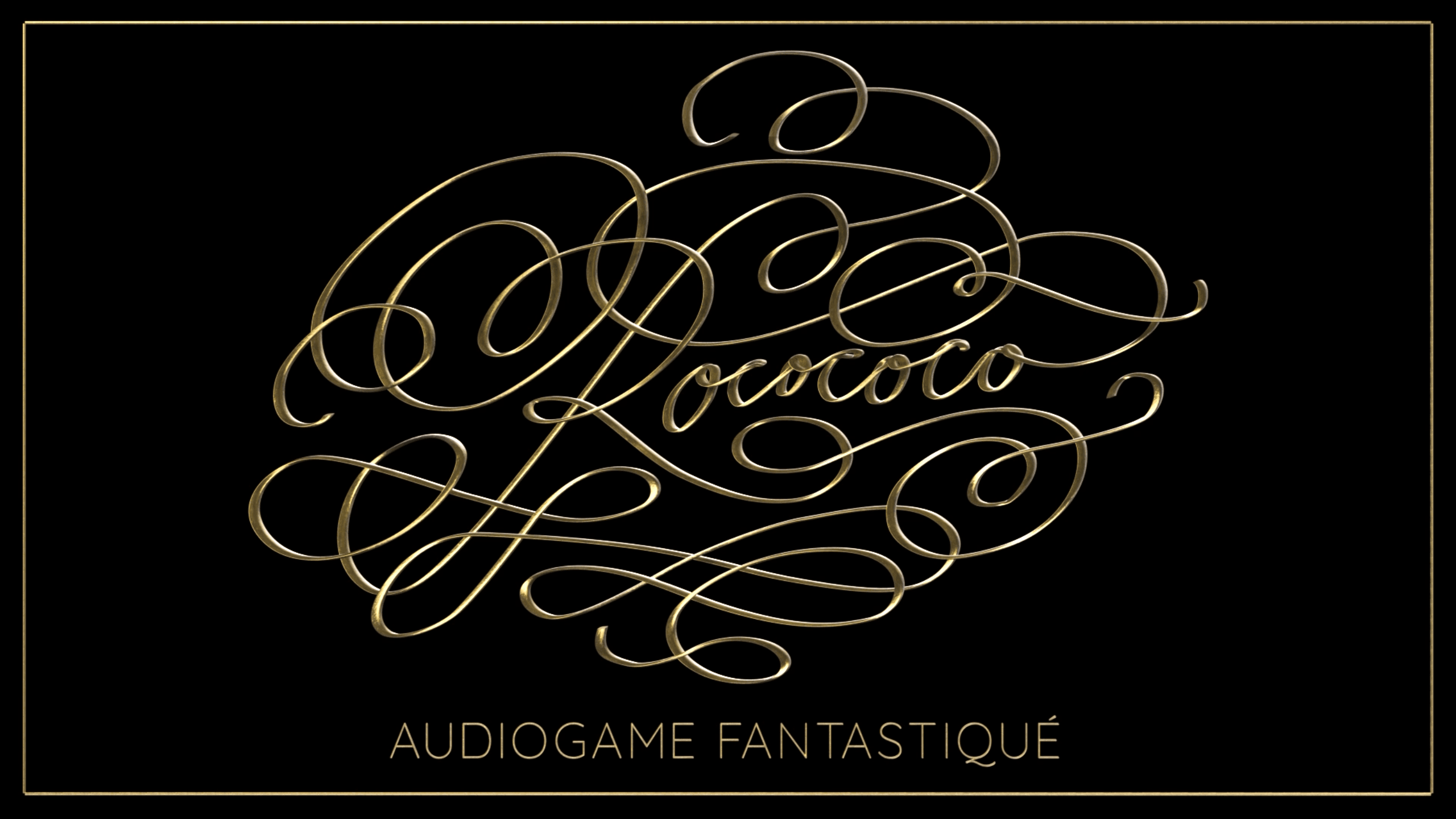
Kasson Crooker analyzes the design of “Rocococo Audiogame Fantastique” and creating an “audiogame” experience through the use of 3D audio and clever sound design.
“Dance at the End of Time” is an electro-acoustic dance piece using choral samples. Having written the darkly comic “The Garden of Earthly Delights” just before the Covid epidemic, I wanted to make a more positive, joyful piece. The CDP software was extended to create and transform rhythmic choral melodies so they could be modified in sung-text, melody, rhythm, tempo, and vocal articulation, and assembled into rhythmic chordal events.
HEKA is an innovative project that combines art, science, and technology to push the limits of creativity and innovation. Part of Pina, a Slovenian NGO with over 25 years in the cultural sector, HEKA creates a unique space where artists, scientists, and technologists can collaborate.
By thinking about electroacoustic practice as a craft and practitioners as artisans or crafters might it be easier to understand what people do? Might it also be easier to teach in an environment closer to a workshop and less like a classroom?
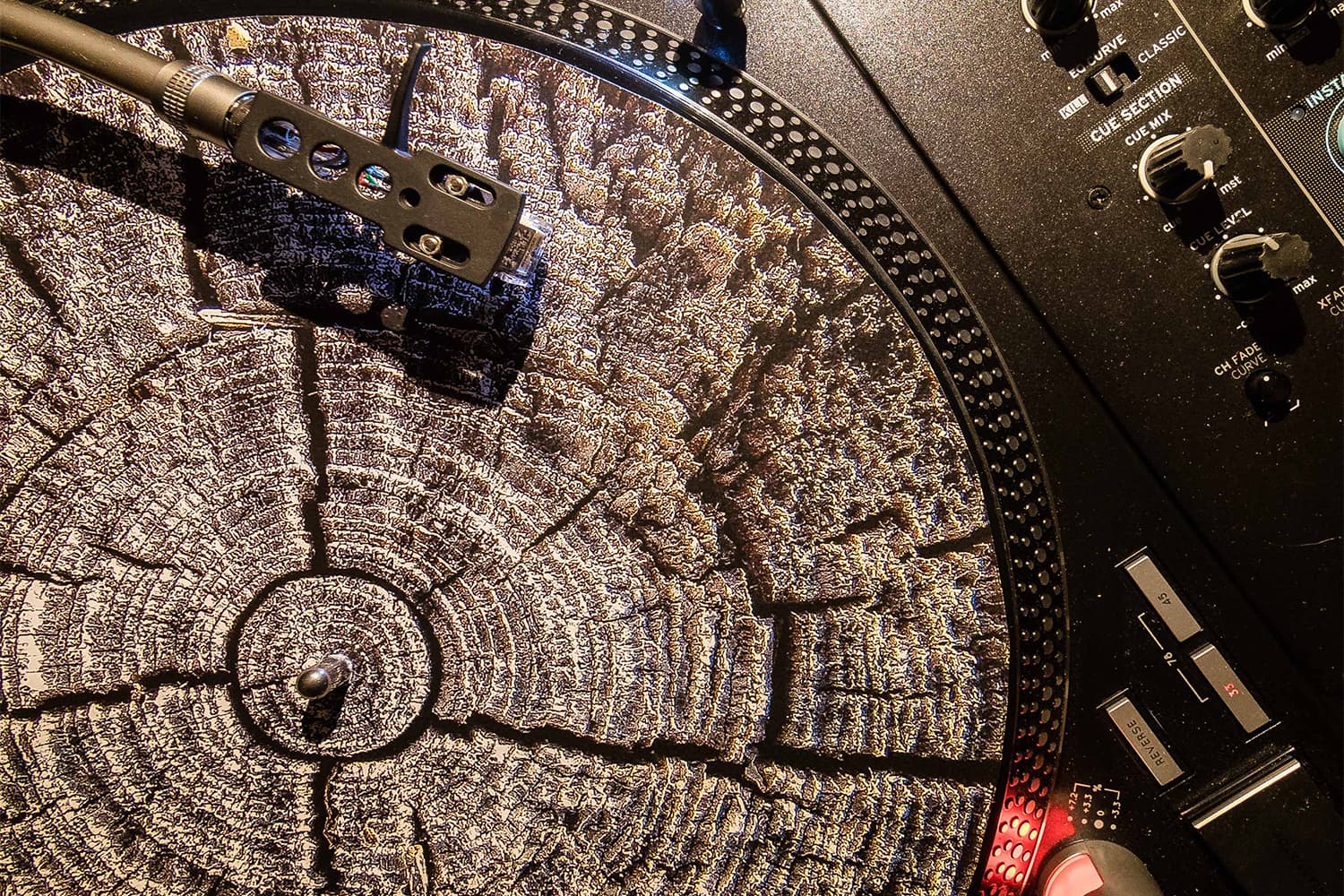
Transceiver is designed as a quadraphonic piece for two turntables. For the recordings, Aras L. Seyhan and Stefan Voglsinger went to various places and non-places in Vienna and the surrounding area. The release aims to encourage gathering, experimentation, and collective listening, reflecting the evolution of communication over distance.
Games that feel real? Spatial audio unlocks focus, emotions & deeper storytelling. Explore the tech & how atmoky brings it to life.
Western common practice notation takes years to learn and is best suited to music of the past. Could that be a reason why most people who play music today don't read any notation at all? Is it possible to create music notations that welcome musicians from any style of music, enabling them to come together in expressions of musicianship and composer’s ideas?
The rapid advancement of generative artificial intelligence, particularly with the emergence of services like Udio, is poised to revolutionize the music production landscape. As these technologies become more accessible and sophisticated, they have the potential to democratize music production and reshape the role of human creators.
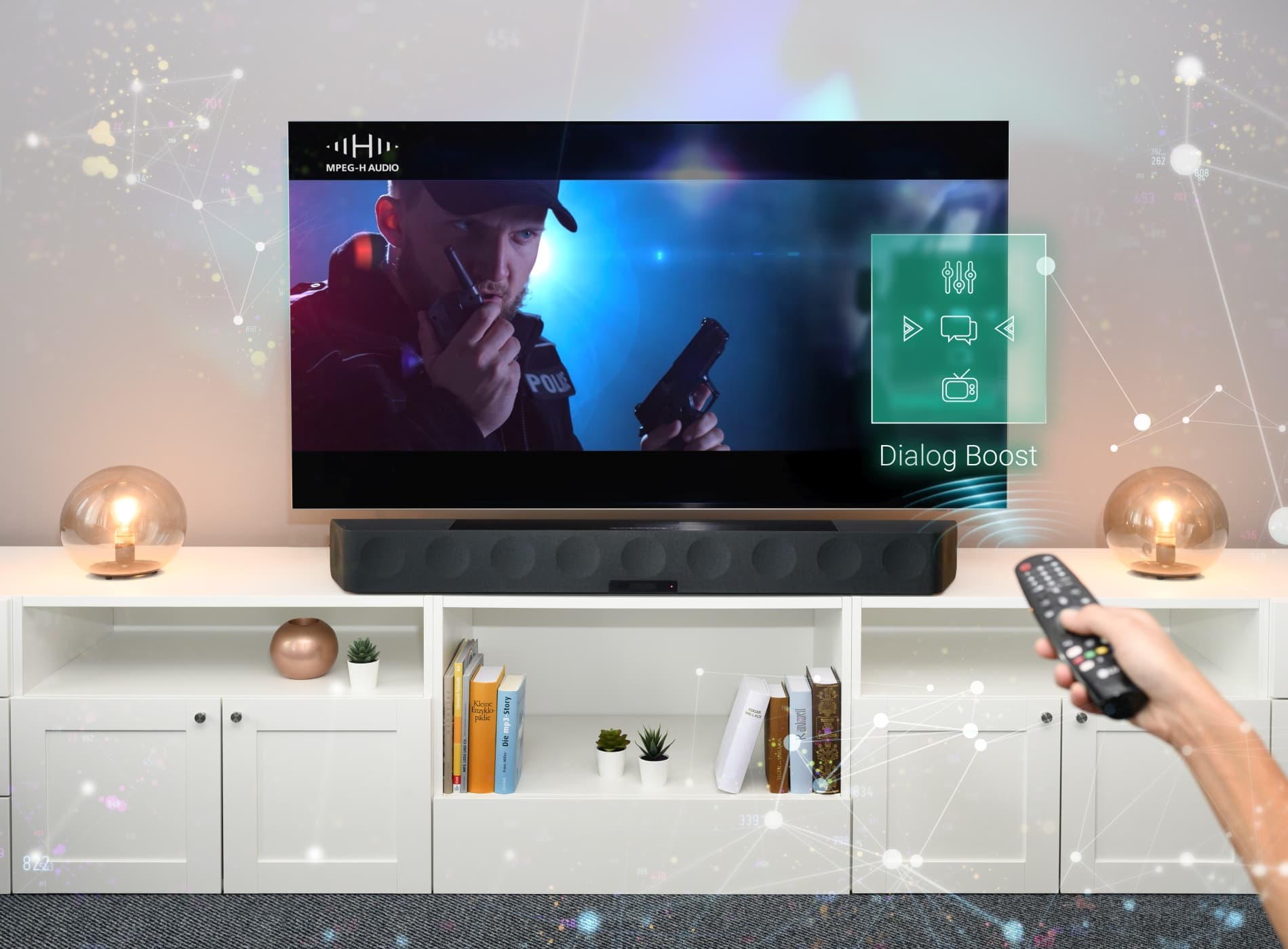
MPEG-H Audio delivers immersive sound that can even be adapted to personal needs. It's fun and makes television more accessible. Find out here why this will soon be part of everyday life in Brazil and how the innovative audio system from Fraunhofer IIS works.
3D audio (or spatial audio) has revolutionized the way sound worlds can be created and experienced in digital environments. This article explains the basics of using 3D audio on the web using the example of my implementation of 3D audio in cables.gl, a versatile highly accessible and free-to-use online tool for visual programming on the web.
AI has been making music since the 1950s. Seventy years later, Frankensteinian robots have not replaced musicians. Musicians are still around. Possibly more so than ever. Still, Eduardo Reck Miranda believes that music technology is on the verge of a significant leap within the next decade. But not because of AI. This leap will be driven by a new type of computer: a quantum computer.
Free improvised music, which took its roots from different genres of music and developed over the years into its special musical genre, requires a lot of flexibility, a variety of different techniques, and virtuosity from its performers. The current article will concentrate shortly on the history of free improvised music, sensor-based instruments, and examples of the practical usage of sensor-based instruments in solo and ensemble performances.
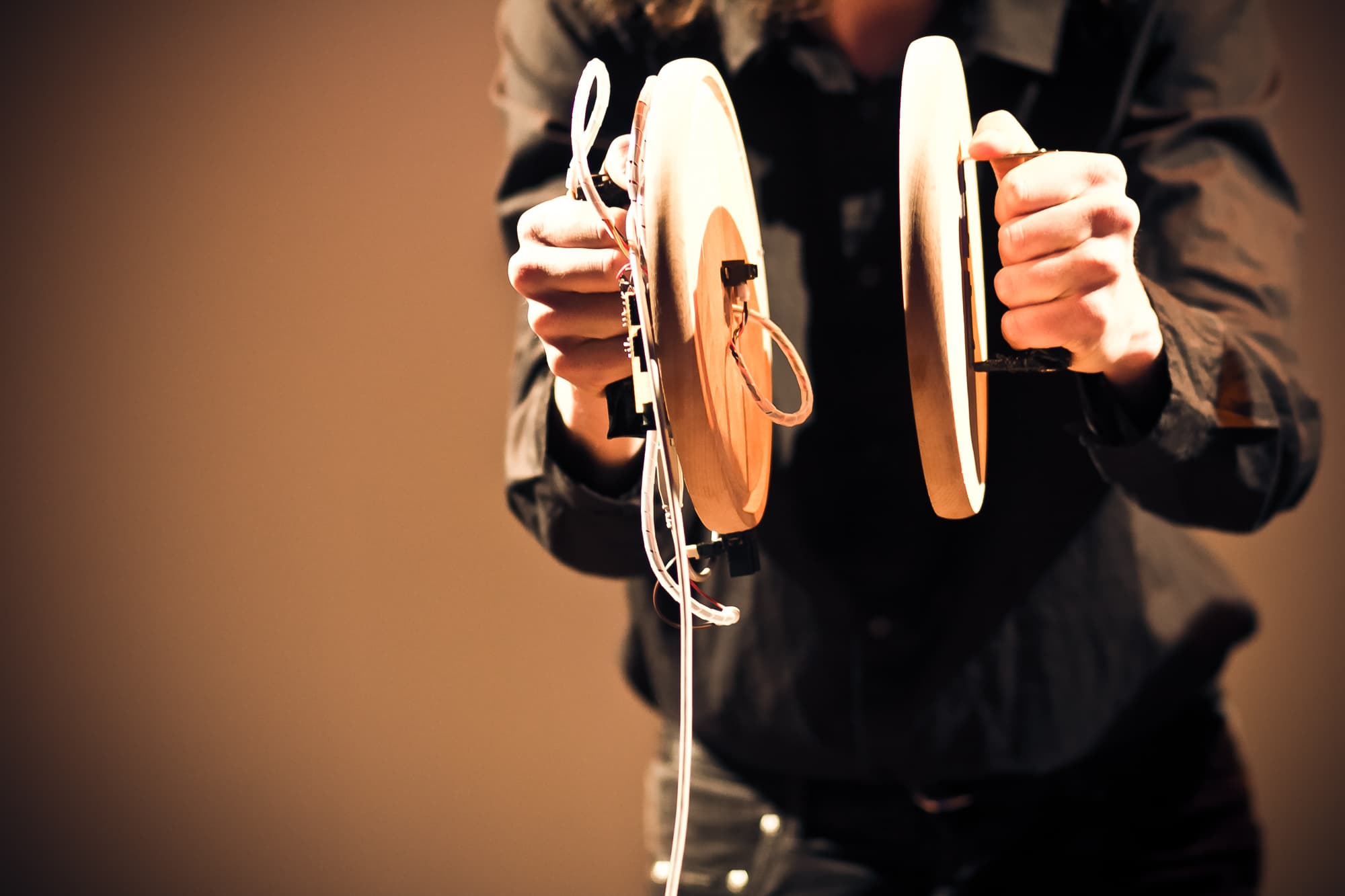
Composer Jan-Bas Bollen casts his light on the motivations behind the development of his HyperTheremin, an instrument with which he presents audio-visual poetry through manipulation of material, revealed only through a precise choreography of the hands in space.
The article describes the manifold interactions between composers and computers in the creative process. Not only the computer per se, but especially the choice of a certain software and already a specific view on the musical material turns into a decisive factor in, often interlinked, generative and analytical approaches–whereby strategies of musical representation and the choice of a particular mapping are of crucial importance. Finally, it is examined how creativity can be defined and located in this creative interaction between man and machine.
The second part of this short series of texts on artificial intelligence is dedicated to current transformations through AI from a social perspective. We are currently witnessing the introduction of AI in almost all areas of society. The article poses questions about agency and highlights both the dystopian potential and desirable forms of digitalization using AI.
From personal walks and conversations to theatrical settings, binaural audio enriches our intimate experiences. Tools like binaural panoramas assist us in creating immersive narratives that transcend both physical and abstract spaces.
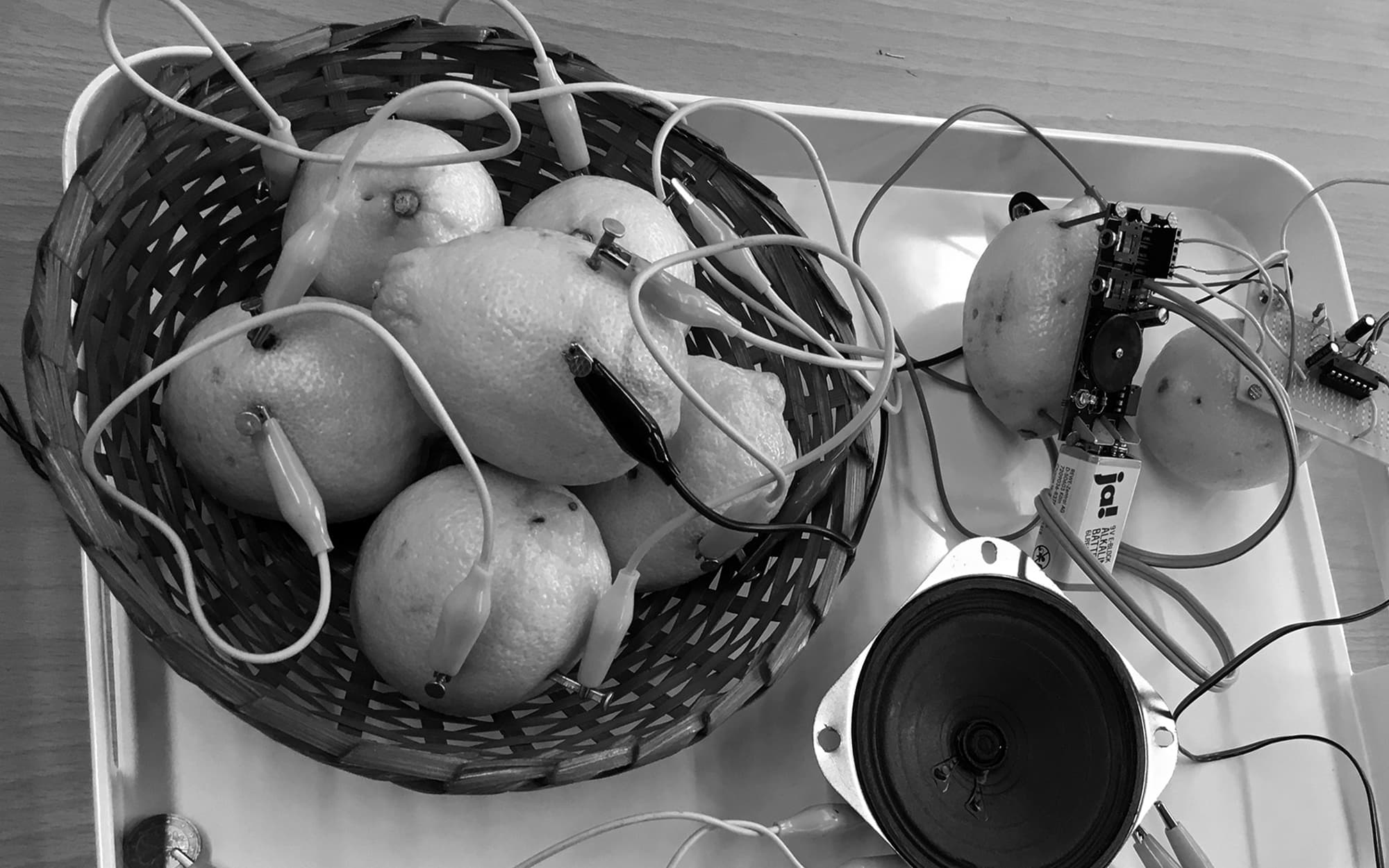
Circuit bending defies traditional boundaries by allowing users to repurpose and customise consumer products, highlighting issues such as planned obsolescence and technological black-boxing. It embodies a DIY ethos, bridging handmade craft with contemporary digital culture. This practice provokes reflection on the complexities of ownership and challenges prevailing notions of innovation in technology.
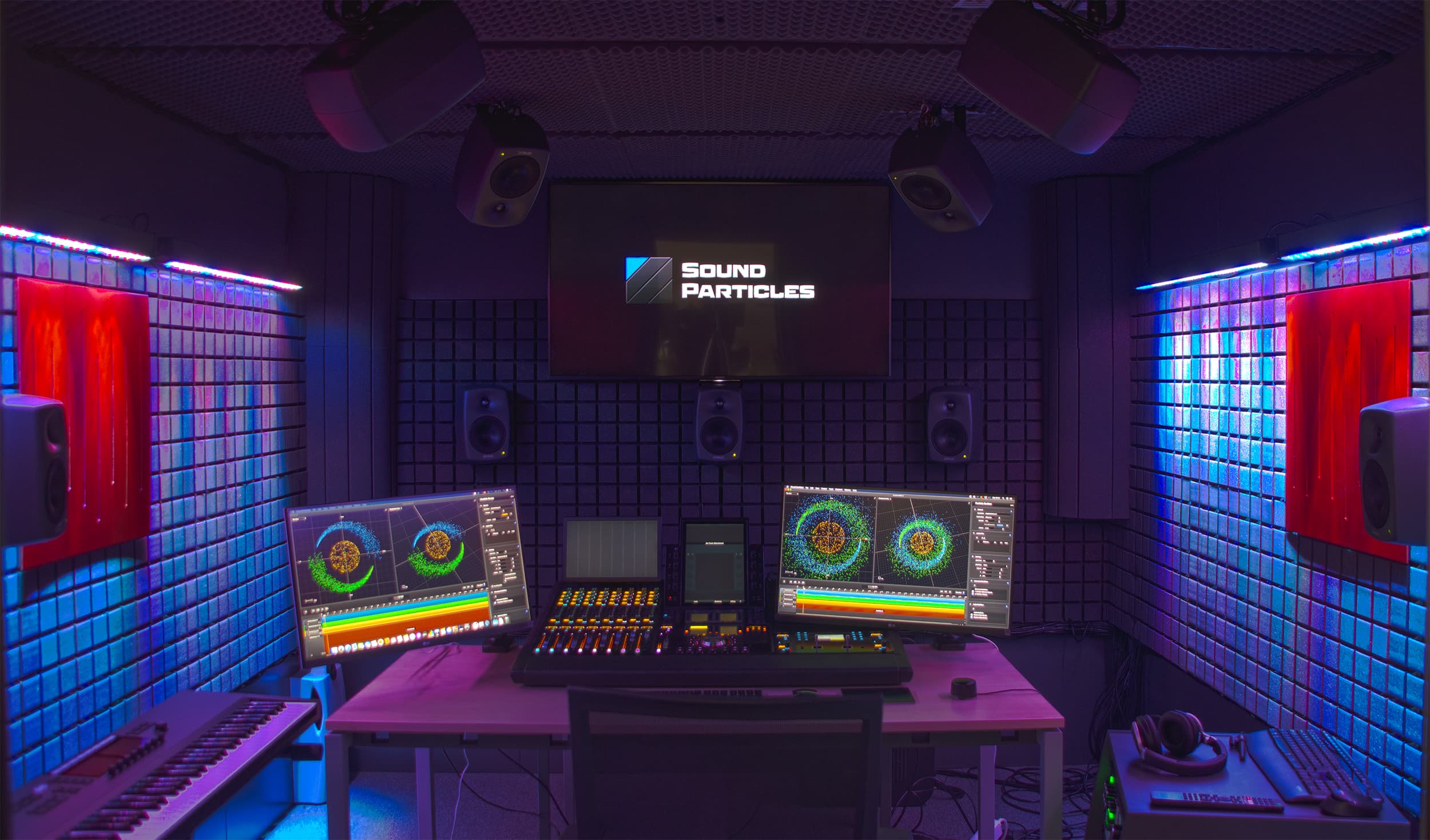
Sound Particles, based in Leiria (Portugal), is an innovative audio technology startup that exploits the power of computer graphics for novel sound design solutions in the field of spatial audio.
How does binaural sound transport listeners to different realms, creating an immersive sensation of being fully present within those intricate soundscapes? The course „Binaural production for sound artists“ offers to unlock the basic techniques and tools for creating this immersion.
tingles & clicks aims to revive a physicality that has been lost in the years of the COVID-19 pandemic in a virtual and physical music project. Outstanding musicians create sound environments and music that evoke quasi-tactile experiences.
Current developments and international efforts to democratize spatial audio technologies in the arts and culture sector are opening up long-awaited new horizons in performance practice. Ambitious initiatives such as OTTOsonics show how quickly and successfully fruitful collaborations and projects can emerge when the possibilities and philosophy of open source are boldly embraced.
How do you perceive sound? Can you describe it to me? With some effort, you may be able to report aspects of your perception of sound, but, crucially, your corporeal experience of it is yours only. However, you may perceive sound - through hearing, hearing prostheses, haptic sensations, vision, perceptual hints in the environment, or a combination of them - that experience is difficult, if not impossible to communicate to another person. This is one of the delights of listening, intended here in the broadest meaning of the term.
Experiments with sound and coding are at the core of my practice as a composer, as well as in research and teaching. But why experiment with sounds at all, and why on the basis of computer programs?
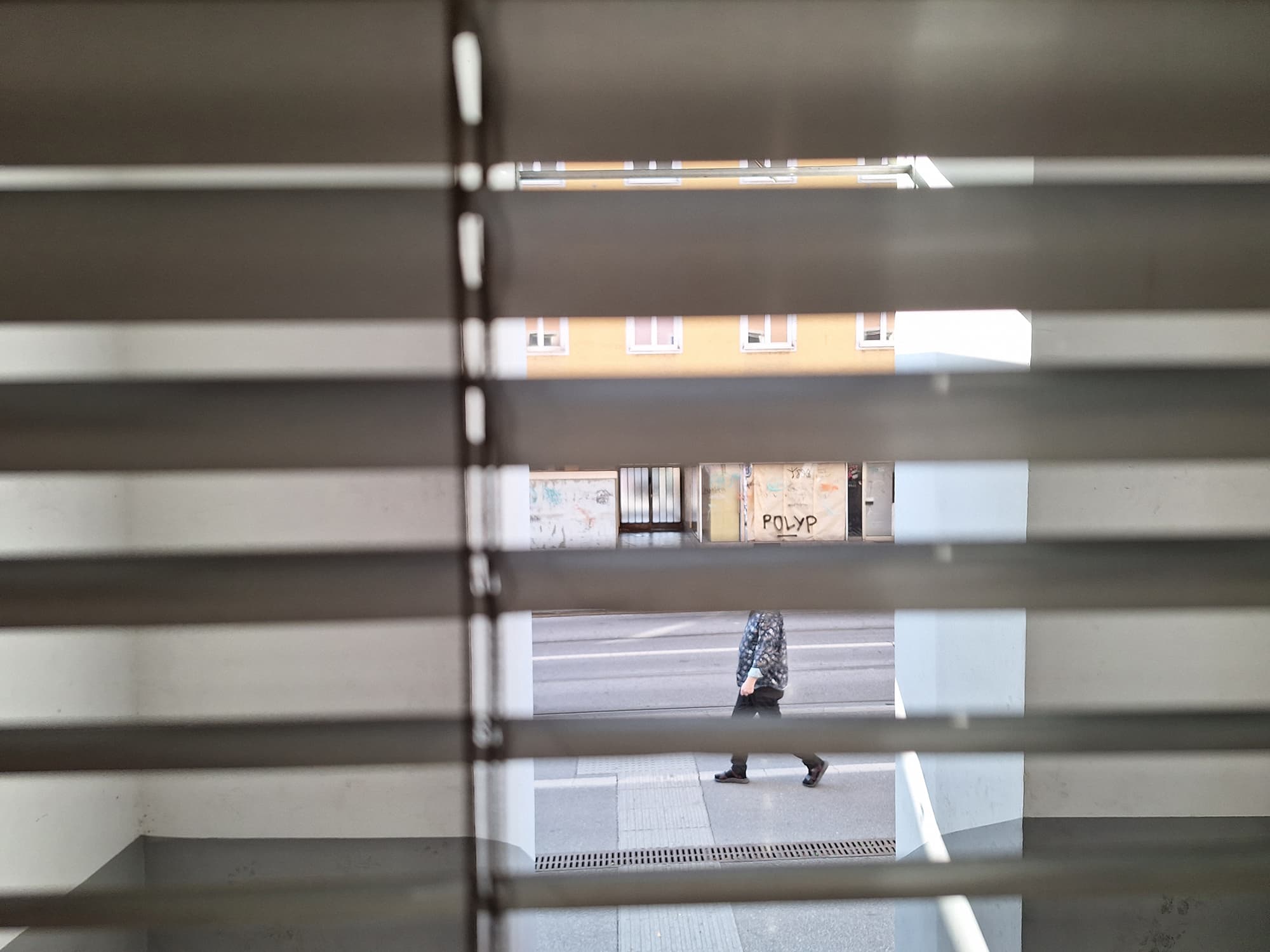
The intention to explore selected places is a recurring theme in my compositions and my sonic field research. What is referred to as a place or space is multifaceted. In this case, the definition ranges from a building site or a farm to an open window and even parts of a composition. How do concrete sounds become abstract, where is the delicate, blurred boundary and its permeability, similar to a Venetian blind?
Listen to the 3D audio matrix with Martin Rieger from VRTonung and embark on an acoustic journey of discovery. Find out how spatial sound at live events and digital worlds expands creative and technical horizons.
Shouldn't the next project have something to do with artificial intelligence? The impression of AI hype has already emerged in 2021. I take a look at history and ask critically about the social changes that AI brings with it and about possible criteria for aesthetic work with AI.
By 2050 over two-thirds of the world's population will reside in urban areas: 7 billion people contributing to, and needing to live with, urban noise. This article discusses some key moments in my work with 3D site-specific sound installations, designed to engage listening in the urban soundscape by revealing interesting features hidden from everyday experience.
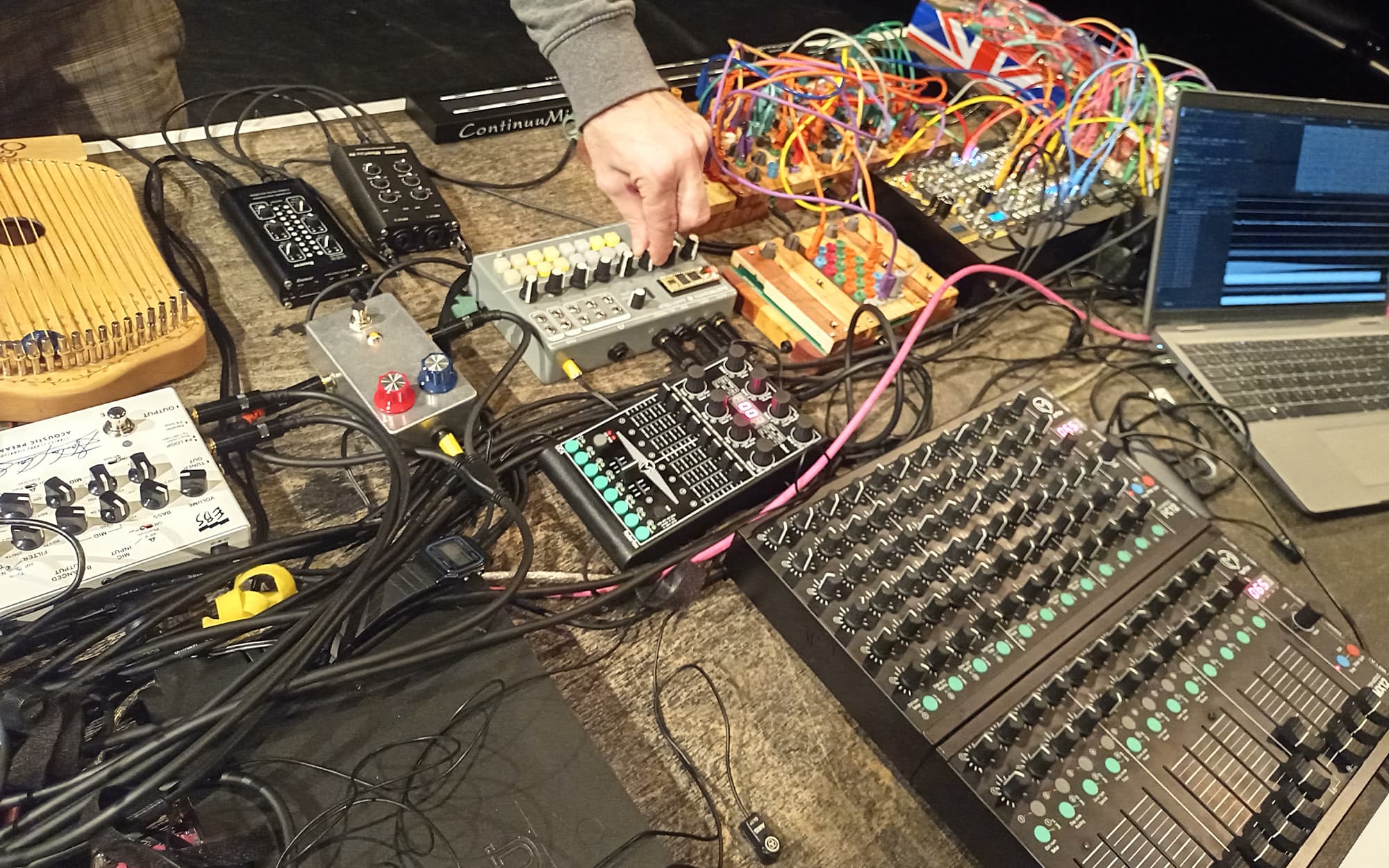
Composer Karlheinz Essl on his recent experiences and experiments with analog modular synthesizers and no-input mixer after decades of digital music making.
Do we use technology or does it use us? Does it expand our space of possibilities or does it enslave us? In the age of omnipresent, smart devices that provide services for all situations in life, but also process and monetize personal data from all situations in life, these insights from 40 years ago have rapidly become more explosive.
In electronic music, interfaces are everywhere, full of light, full of color, full of promise, and full of sounds. Here I show how the idea of these interfaces has developed, and how the switch morphed with a pixel.
What came first - the sound or its space? Spectral properties provide information about meaningful spatial movements that match a sound. In the search for the right sound, I rediscover the potential of Ambisonics.
Virtually unbeknownst to the general milieu of contemporary art practices, as well as to most conventional musical realms, an ongoing worldwide-scale revolutionary shift has taken place over the past few decades in the multiform universe of creative work with sound.
Perspectives on acoustic staging and acousmatic sound direction – Based on a differentiation of neutral sonic events and various gradations of intentionally generated sounds, the path of the electroacoustic sound object from its production to its projection into the performance space and on to auditory perception is outlined.
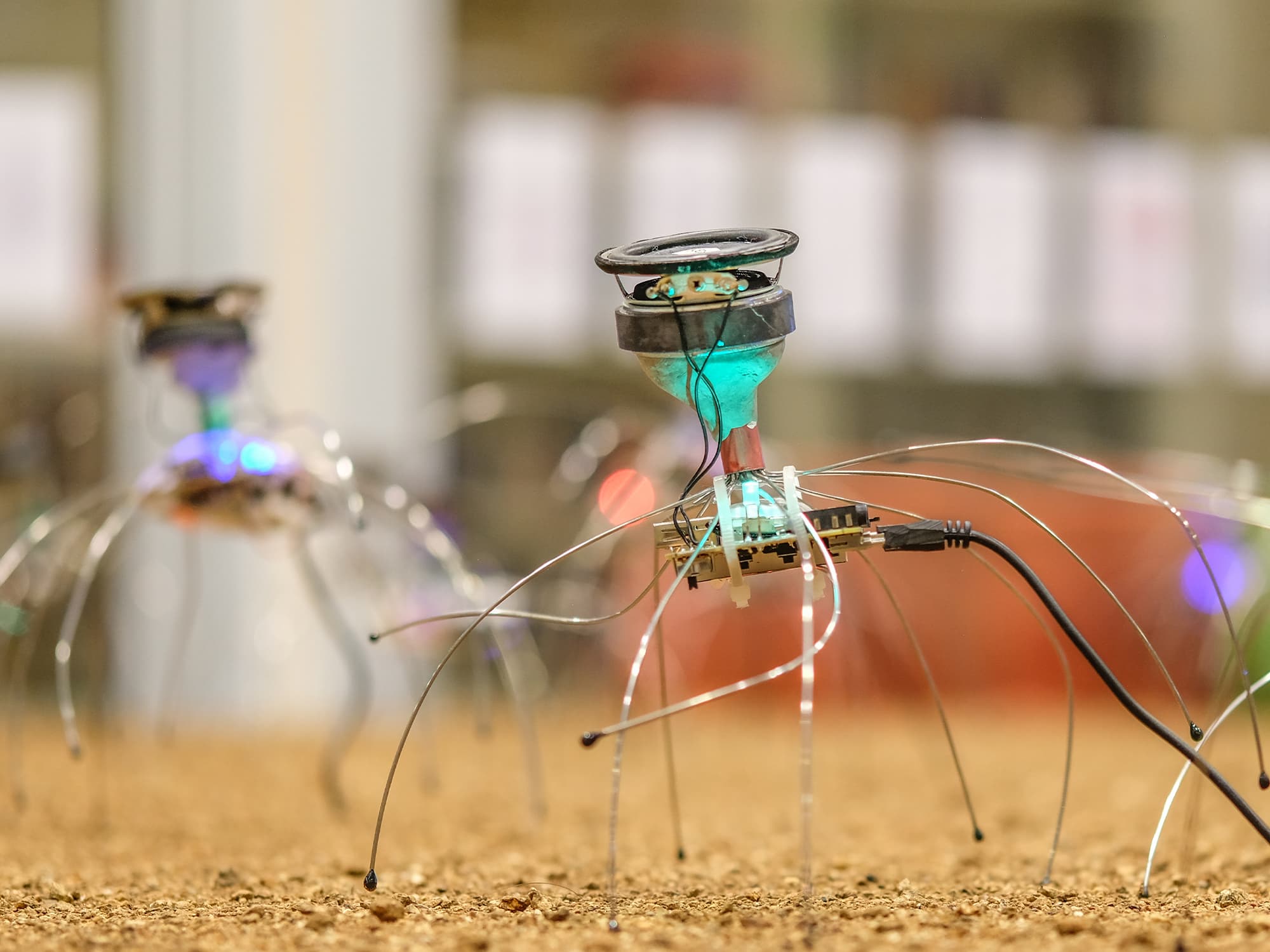
The sound installation "Les Grillons du Rêve" demonstrates the uniqueness of each cricket in a group, while we are used to hearing them sing in chorus. The starting point for the project was a workshop with children in Chile to research real crickets and build electronic cricket twins.
This is a short selection of listening exercises that are usually suggested during workshops, sound walks, or lectures on listening awareness. Of course, they are a little different each time, depending on the location and participants.
From the high esteem of rational mechanistic culture to the present of the "sonic" world experienced unnoticed through listening, to the future of music-making by EVERY BODY.
What Stockhausen did back in 1955 still sounds fresh when Clara Iannotta does it today. Since spectralism, we have known that entire spectra can be put together at will. If this ability is used in a targeted way to develop sounds further, we have resynthesis.
Can visible elements change the perception of invisible sounds? This article examines the work of Estelle Schorpp and Ji Youn Kang, who explore the boundaries of musical perception by playing with the visible and invisible in music.
Devil’s Music - a performance piece about global media, local culture and individual interference – emerged in 1985 out of the confluence of my fascination with early Hip Hop DJs, a Cagean love of the splendor of radio, and Electro-Harmonix’s introduction of the first affordable, portable samplers.
Reflections on futuristic aspects of radio technology and the human body based on Tetsuo Kogawa's experience as a radioart performer and philosopher-critic. Recovering the almost abandoned 'phenomenology', he tries to revive some key concepts such as 'horizon' and 'bracketing' (epoché) for our next practice in the age of 'digital fugue'.
Notes on Clara Oppel´s sound art. What does art sound like? Well, mostly it doesn’t sound at all. Traditional painting and sculpture don’t have an audio track. Until recently, the temples of art were silent, often almost devoutly silent, except for banging doors and so on – sounds that didn’t come from the works of art. Such sounds were certainly not part of the creative conception of the artists being exhibited in the hallowed halls.
Since 2012, Reni Hofmüller has been working with communicationspaces that are generated and characterized by antennas and interpreted musically and improvisationally in the live set. The soundscapes, which originate from the reception of electromagnetic waves, give space to the world in which the sculptures function as "world receivers", as it were.
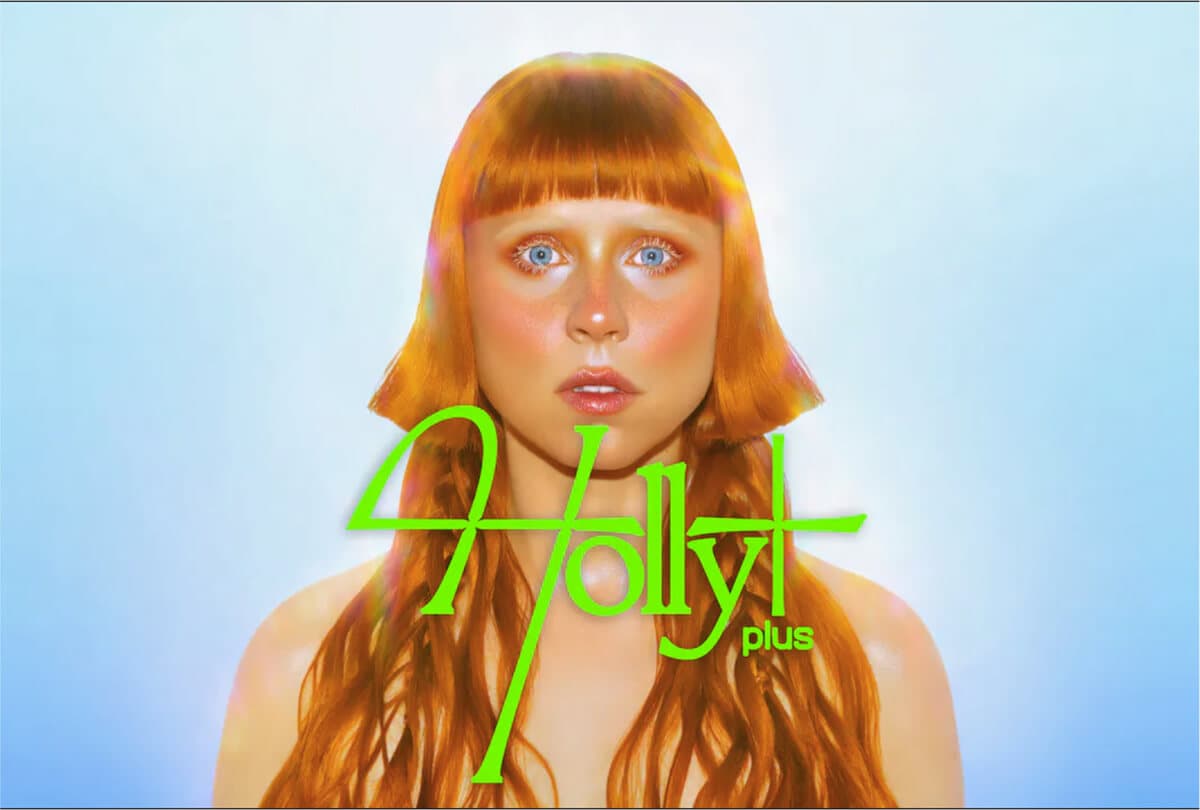
AI musician Holly Herndon makes her voice available to everyone as a freely usable tool plus exploitation model.
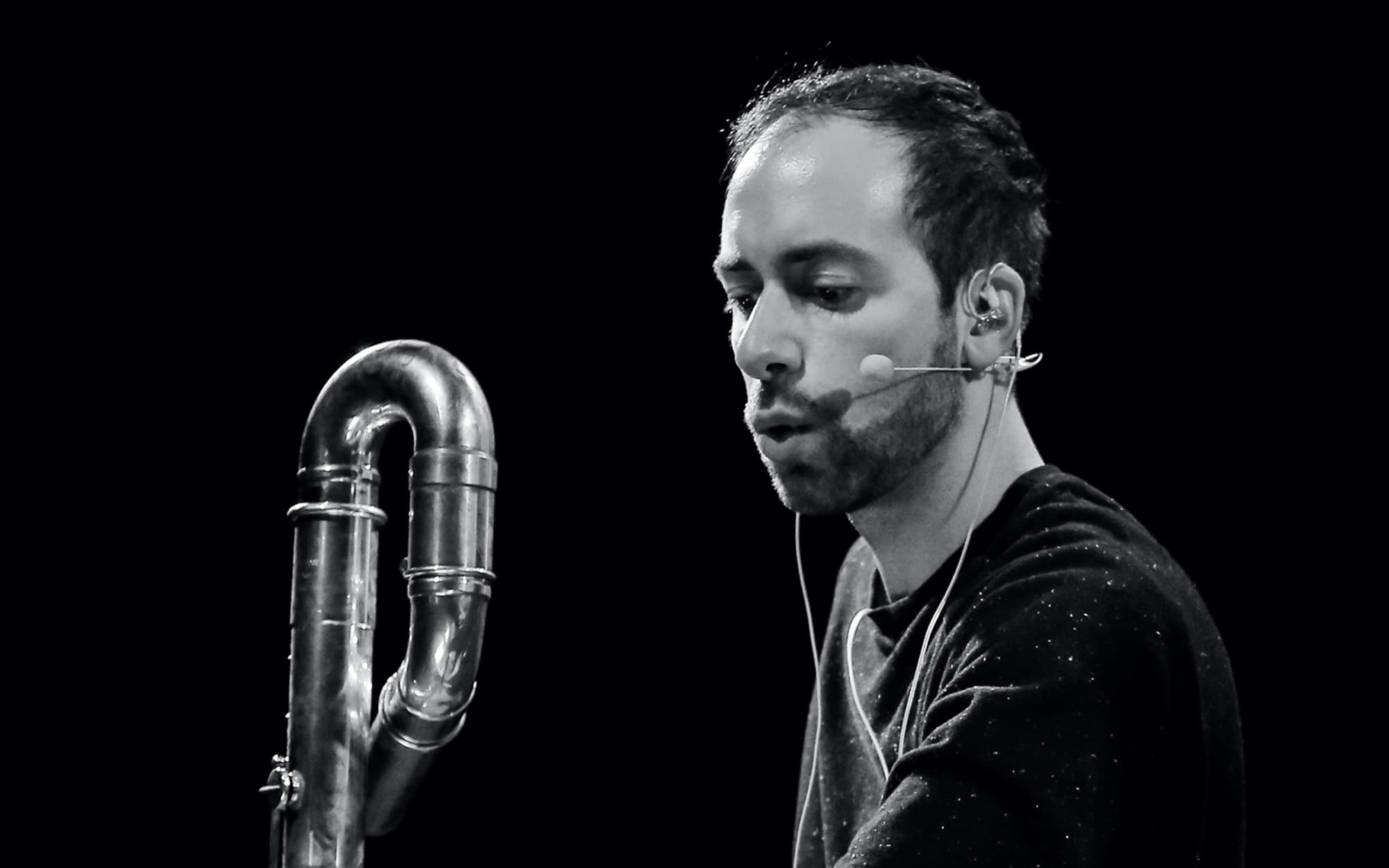
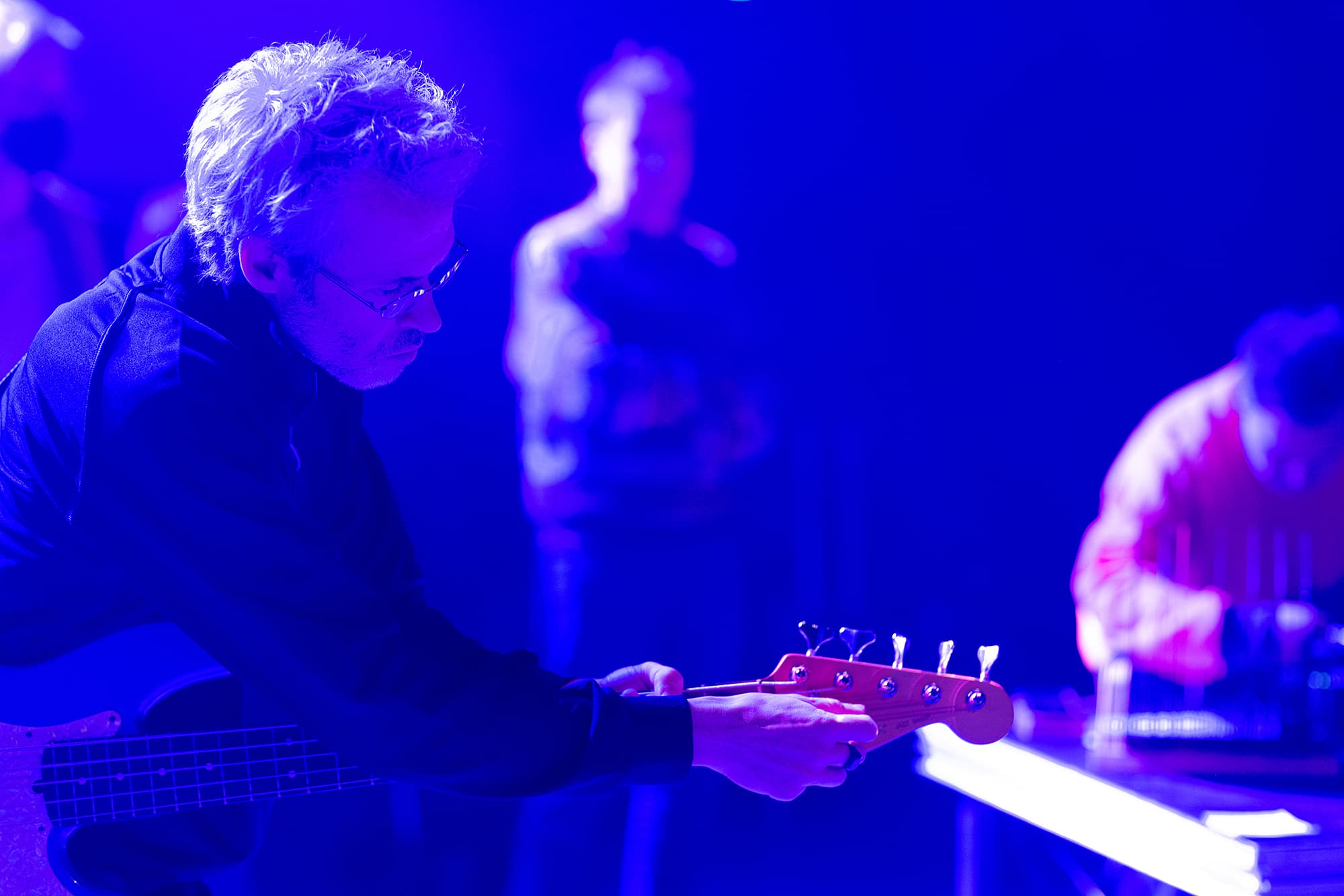
I am introducing a larger narrative of projects created from the perspective of a creative musician today. Especially various bass instruments have been a foundational point of departure for my expeditions into a spectral wealth of tactile approaches, guided by themes of ecological thinking in the late-industrial age.
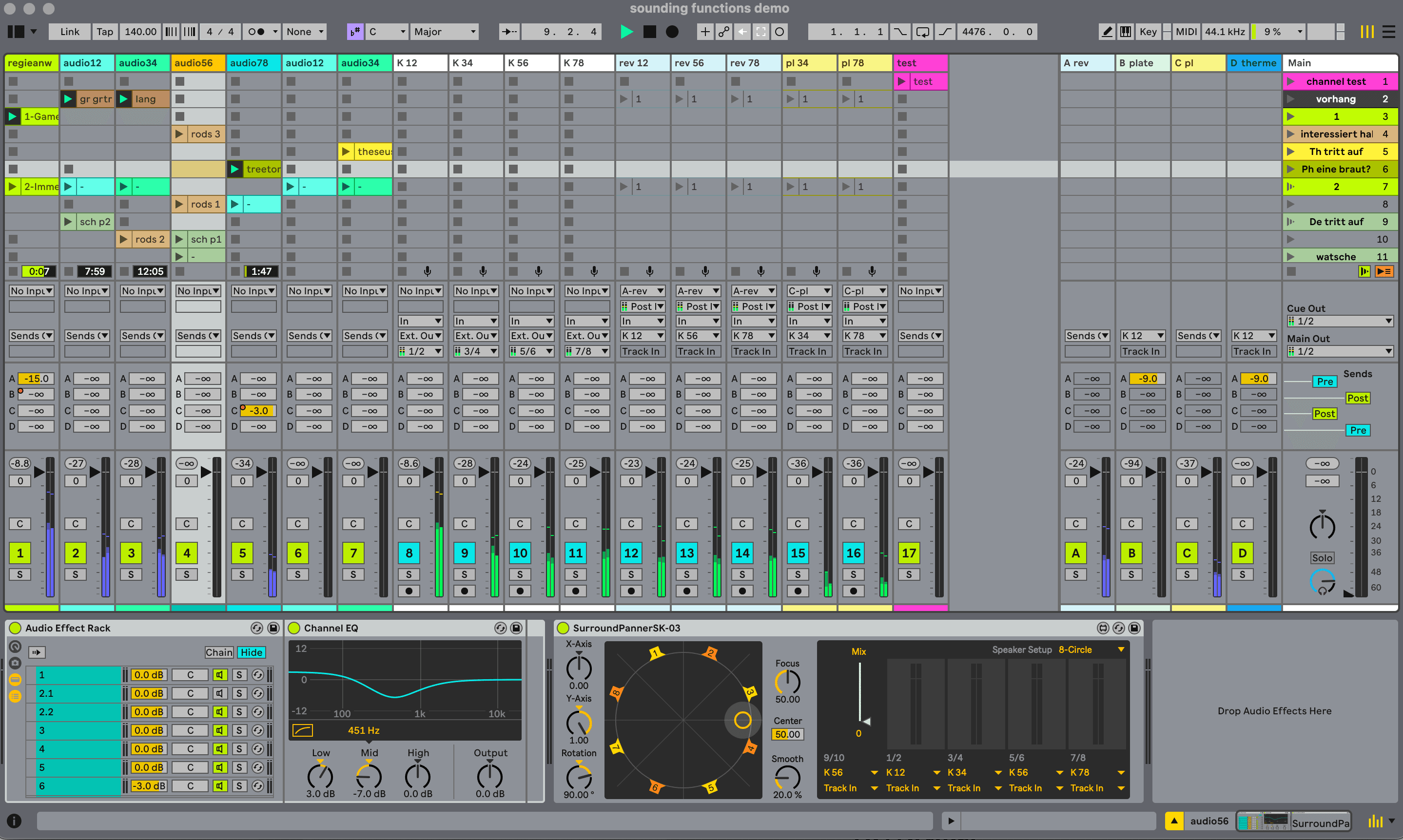
A guide on how to use spatialized effects in multichannel live sets and how to implement automation for return tracks in Ableton Live when effects that are fed via sends need parameter changes over time. Plus, some multichannel tips and tricks.
In the 1950s Schaeffer assembled the Groupe de recherches musicales (GRM) to create a catalog of sound objects and their specifications, the so-called solfège. The outcome of this groundbreaking research, gives rise to new thinking about compositional methods with a focus on the medium of sound and listening. Continuing technological progress allows composers to use the medium sound, as opposed to writing, as a process-oriented score for musicians.
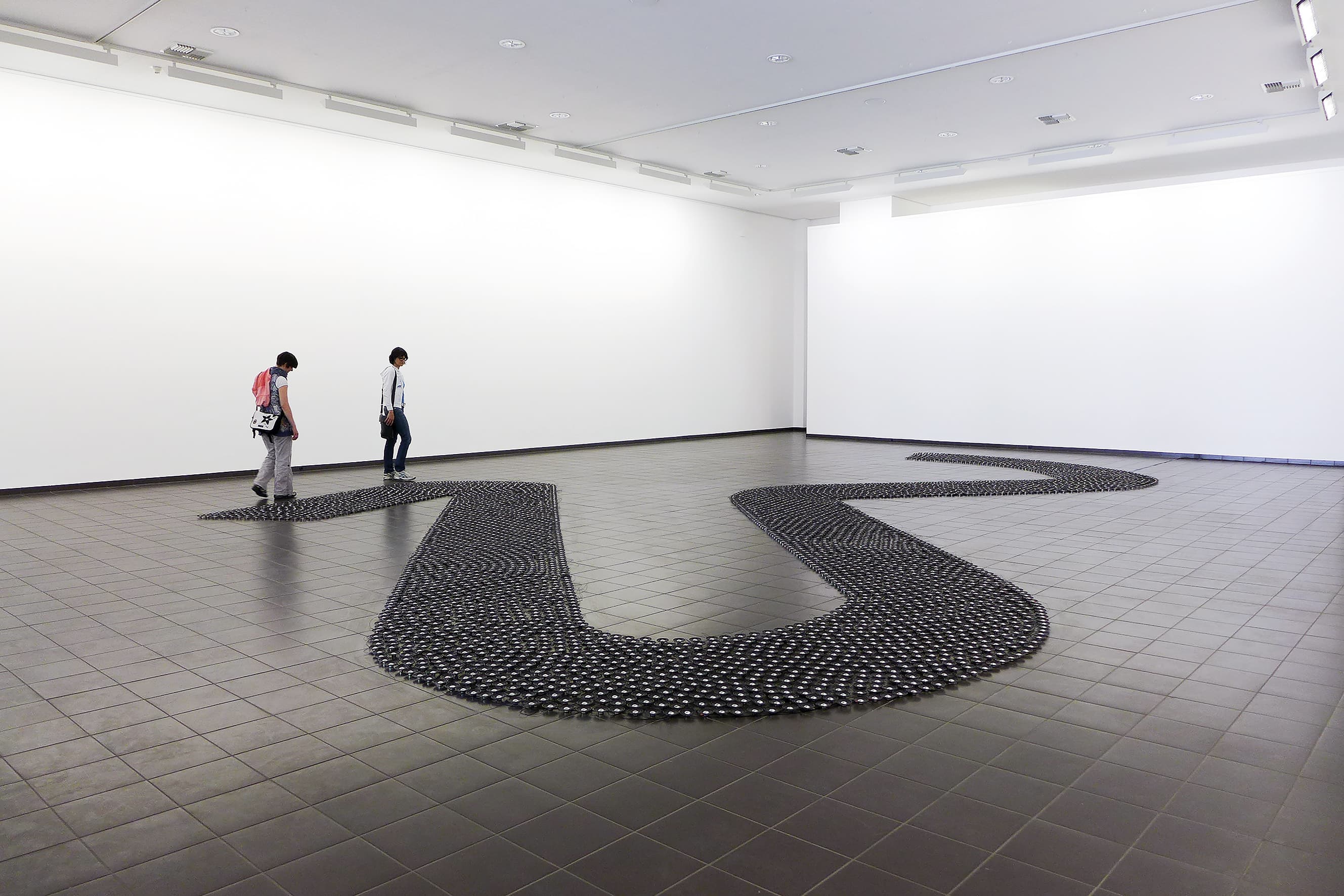
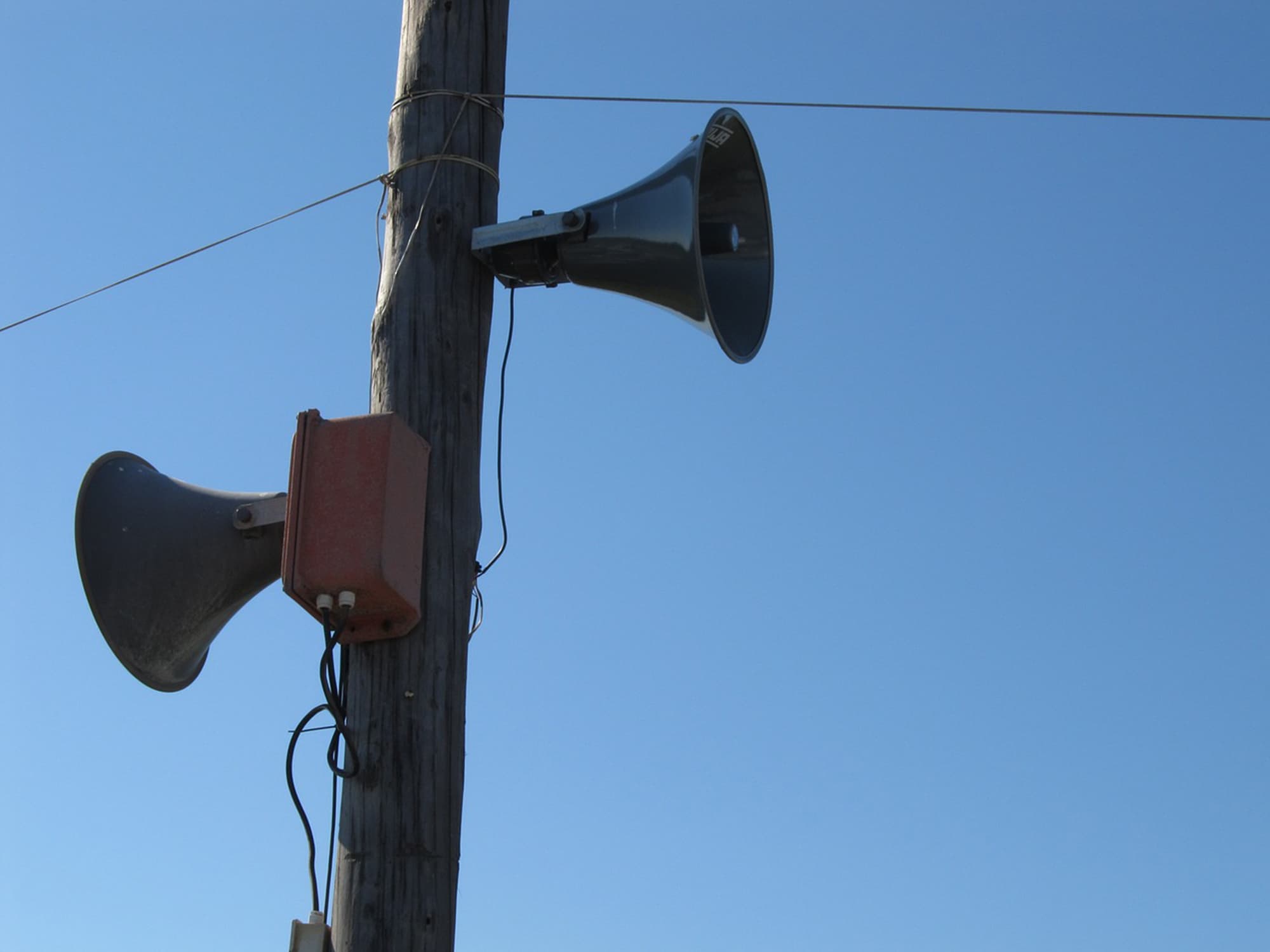
Loudspeakers are more than just technical devices. They change the way we listen to sound and music and can become instruments or performers themselves. Portable sound sources such as the boombox and the Walkman inspire new forms of sound art because they invite us to listen while walking. In her essay, Margarethe Maierhofer-Lischka describes how "listening in transition" can be shaped and why she finds loudspeakers so fascinating as a material.
O+A (Bruce Odland/Sam Auinger) has been around for 35 years. They developed a Hearing Perspective as a general approach to their creative work, primarily sound installations in public spaces. Their new YouTube channel, O+A Sound Stories, talks about their research and work. The text of the article was written by O+A and Sam Auinger.